Basics · 7 November 2026 · 4 minute read
Buying centre in B2B: who takes part in the decision and what they want to know
The buying centre according to Webster and Wind: the roles in B2B purchasing, what each role expects from your website and which content helps.
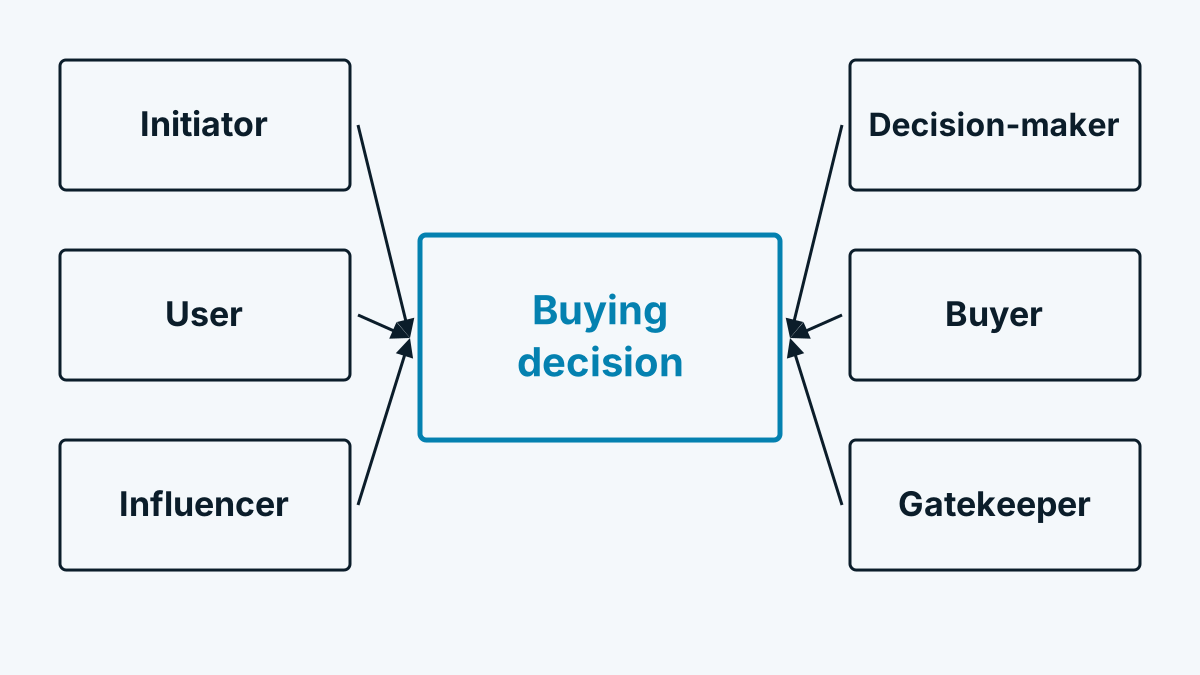
Anyone selling to companies rarely speaks to the person who decides alone. Usually several people have a say: a specialist department, management, purchasing, sometimes IT. The model for this is called the buying centre. It helps to align content and conversations with the people who actually have a say. The person who called first is only one of them.
Where the model comes from
The term goes back to Frederick Webster and Yoram Wind. In 1972 they described, in the Journal of Marketing (volume 36, issue 2, pages 12 to 19), a general model of buying behaviour in organisations (A General Model for Understanding Organizational Buying Behavior). The buying centre comprises all people in a company who are involved in the purchasing process. The five original roles are user, influencer, decider, buyer and gatekeeper. The role of the initiator, who first recognises the problem, is often added in later presentations.
A buying centre is not a department. It is a group that comes together for a purchase and dissolves again afterwards. One person can have several roles. In small companies, all roles sit in one head.
The roles and what they want to know
| Role | Task | Most important question |
|---|---|---|
| Initiator | Recognises the problem and starts the search | Is there a solution for this at all? |
| User | Will work with it later | Does it make my work easier or harder? |
| Influencer | Gives specialist advice, often IT or subject experts | Does it fit our systems and standards? |
| Decider | Has the authority to make the choice | Is it worth it, and what are we risking? |
| Buyer | Negotiates price and contract | Is the offer complete and comparable? |
| Gatekeeper | Controls which information is passed on | Does this provider deserve my colleagues' attention? |
Content per role
You do not need separate pages for each role. Often it is enough to build existing pages so that each role finds its answer.
- Initiator: guide articles that describe the problem before naming the product. He looks for terms for his situation, not product names.
- User: screenshots, a quick-start guide, an example from everyday work. The more specific, the better.
- Influencer: technical description, interfaces, security and data protection in clear words, a data sheet to download.
- Decider: references from similar companies, price orientation, an answer to the question „What happens if it does not work?“.
- Buyer: pricing page, contract terms, durations, notice periods.
- Gatekeeper: short, easily quotable summaries. Anyone forwarding a recommendation does not want to have to read a long text.
What the website reveals about the buying centre
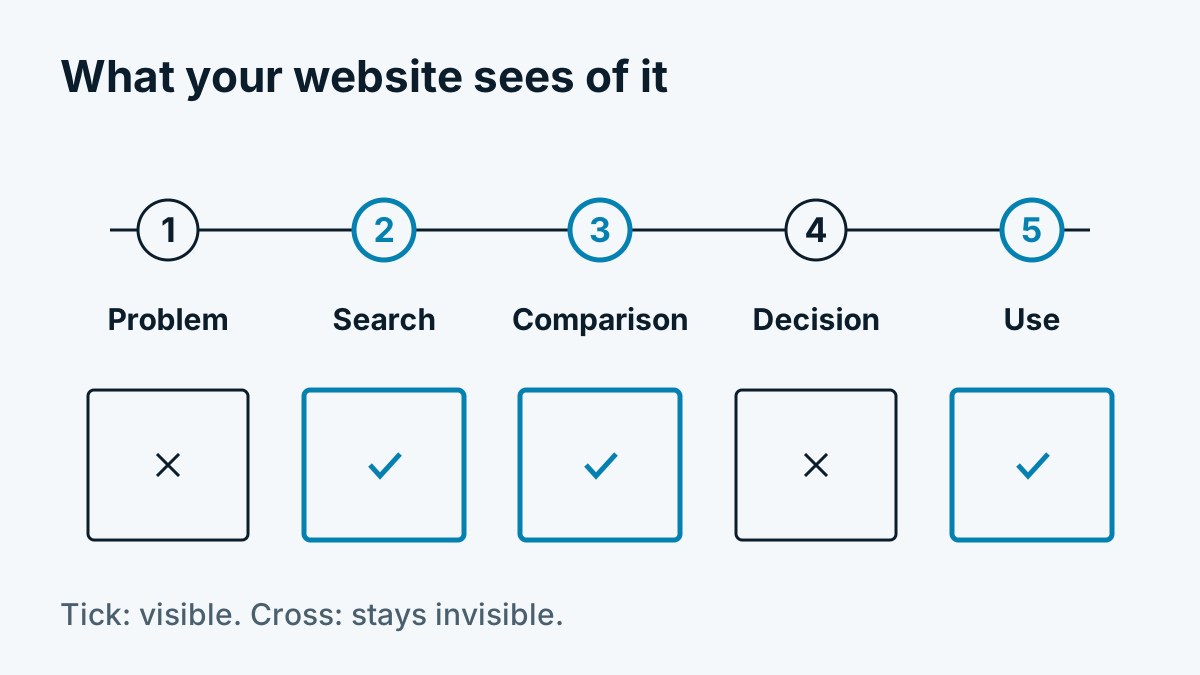
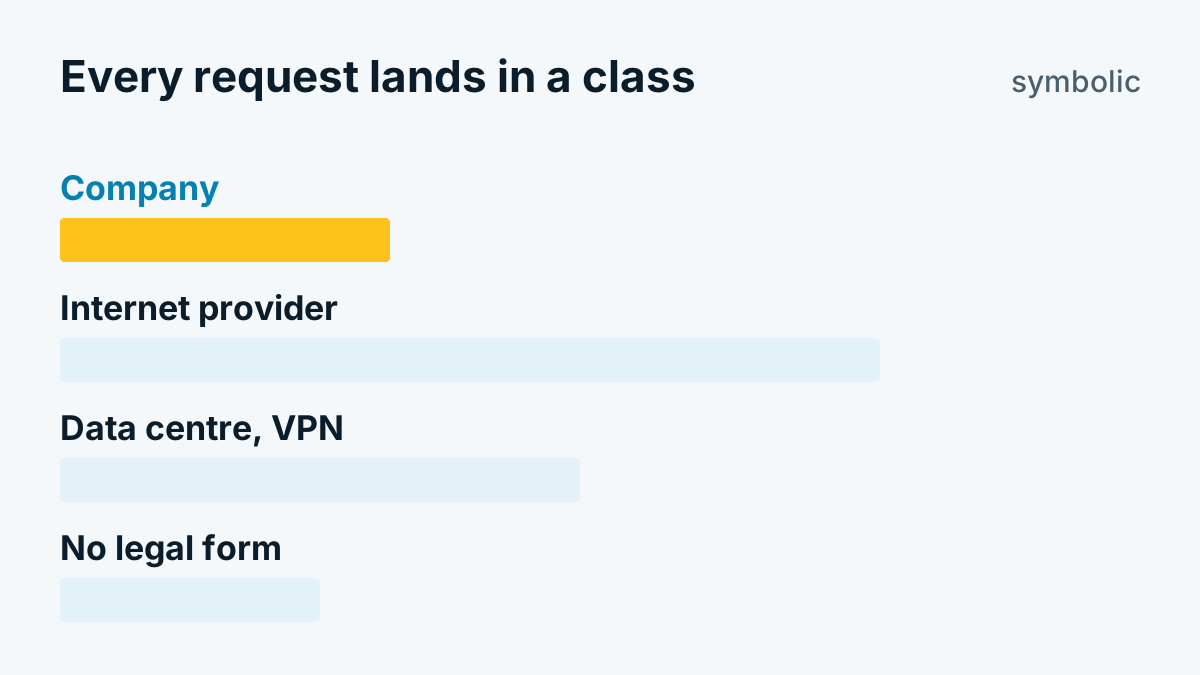
A company's page views sometimes show who is reading along at the moment. If the technical documentation is read one day and the pricing page the following week, that points to several roles. It is not certain. A single person can read everything too. Company identification shows companies, not people. The limits are described in What visitor identification can do and what it cannot.
How such signals are put into an order for sales is shown in Lead scoring in B2B: a simple model based on website signals.
How to use the model in sales
- Ask about the participants in the first conversation. „Who else will look at this?“ is not an intrusive question.
- Record which roles you already know. A column in the CRM is enough.
- Look for the missing role. In many deals, the contact with the decider or with IT is missing.
- Give your contact material to take along. One page he can forward internally without rewriting it.
What this looks like across the whole process is described in B2B sales process: where the website supports every stage.
Frequently asked questions
Does the model also apply to small companies? Yes, but in a smaller form. In a business with ten employees, one person who combines all roles often decides. Then what matters most is that your website answers the questions one after another.
Do I have to address every role individually? No. What matters is that you know the roles that typically occur in your business. You should be able to answer their questions. For a low-risk product there are fewer roles than for an investment.
How does the buying centre differ from the ideal customer profile? The buying centre describes the people within a company. The ideal customer profile describes which companies fit you well.