Law
§ 25 TDDDG: cookies and tracking in Germany
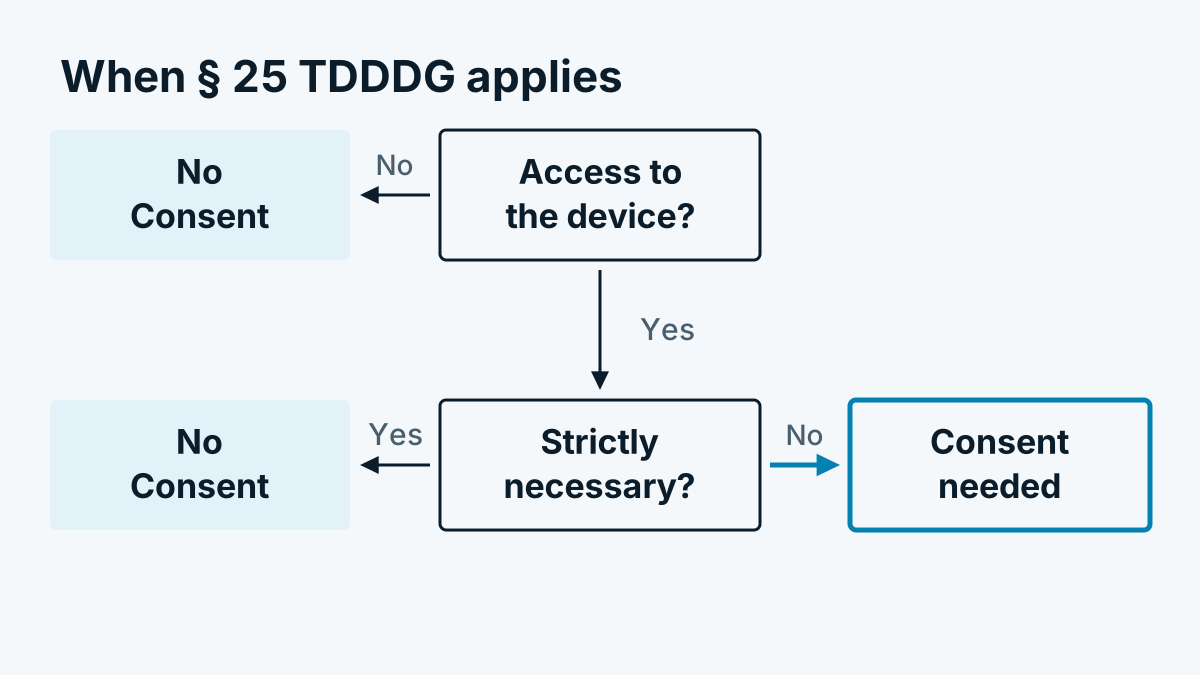
§ 25 TDDDG (formerly TTDSG) regulates cookies and scripts: when consent is needed, which exceptions apply and what this means for analytics tools.
Know-how on identifying companies on websites. Technology, law and practice, without sales promises.
Law
§ 25 TDDDG (formerly TTDSG) regulates cookies and scripts: when consent is needed, which exceptions apply and what this means for analytics tools.
Practice
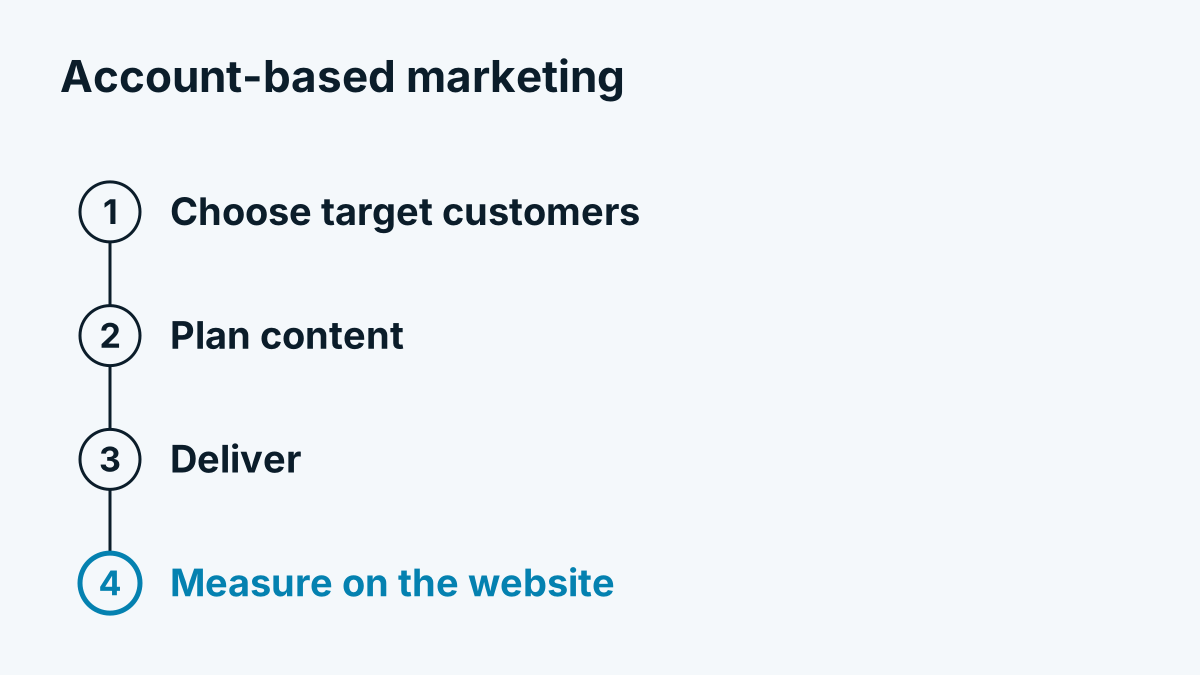
Account-based marketing focuses on selected companies. How to define target accounts, plan content and use your website to measure whether it works.
Comparison
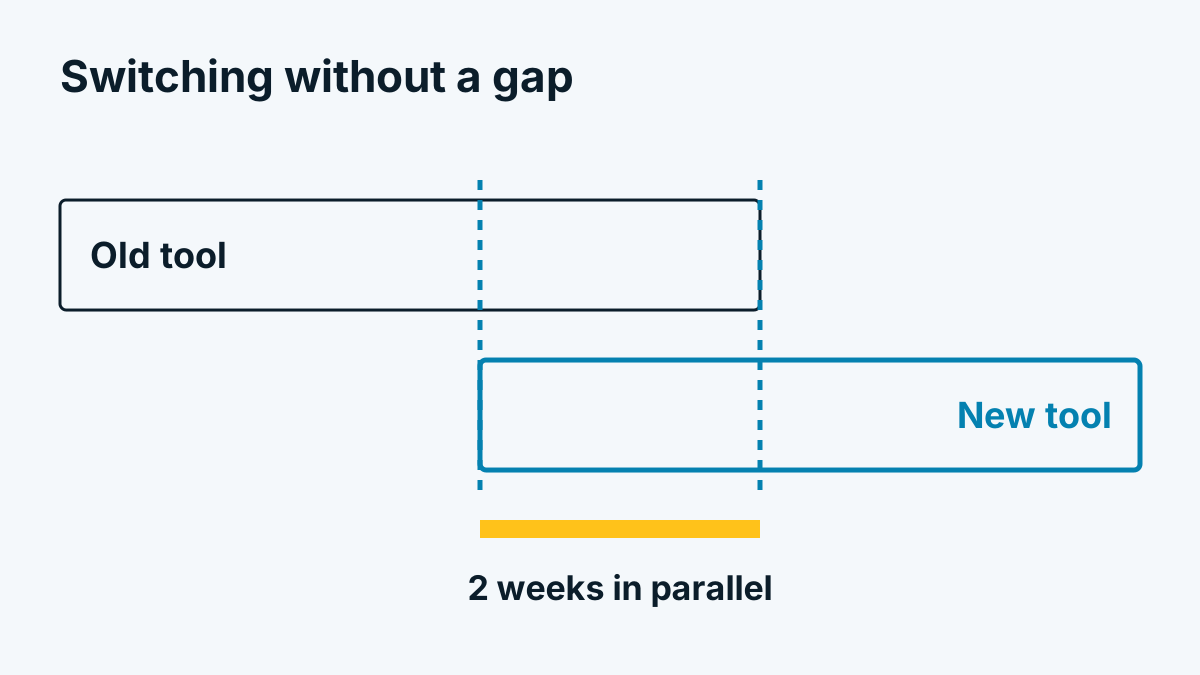
Looking for an alternative to SalesViewer or Leadfeeder? Six questions before switching and seven steps so that no data is lost.
Comparison
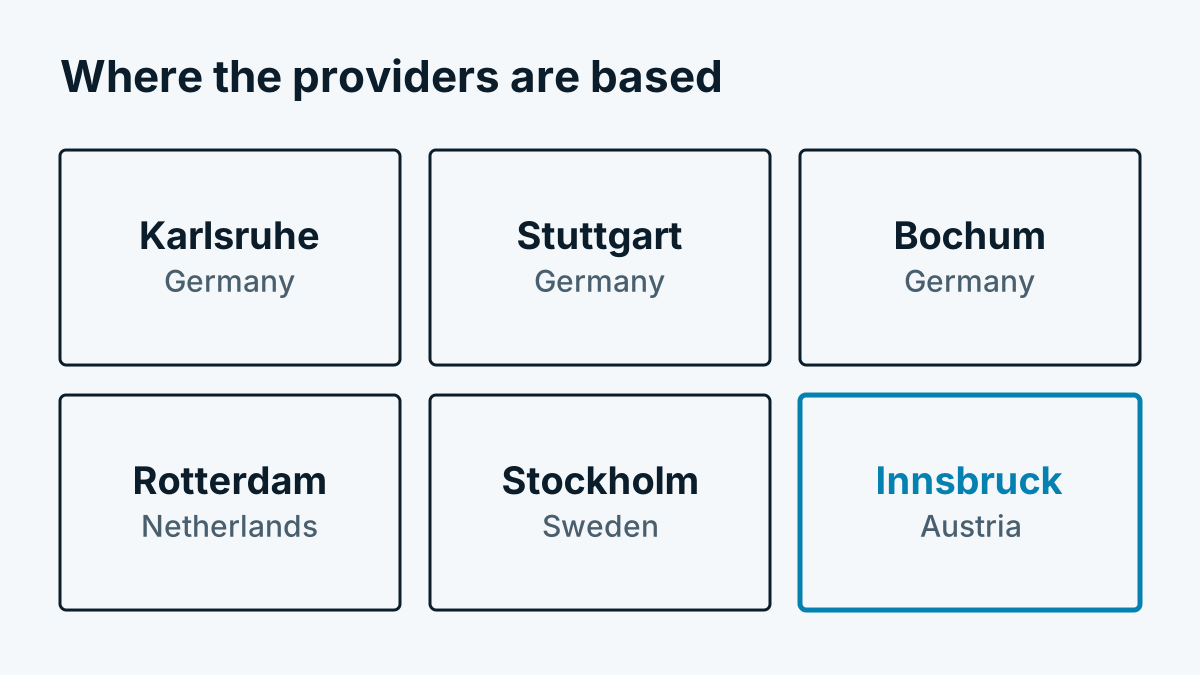
Which providers identify companies on websites, where they come from and how they differ. A factual market overview with sources instead of a ranking.
Law
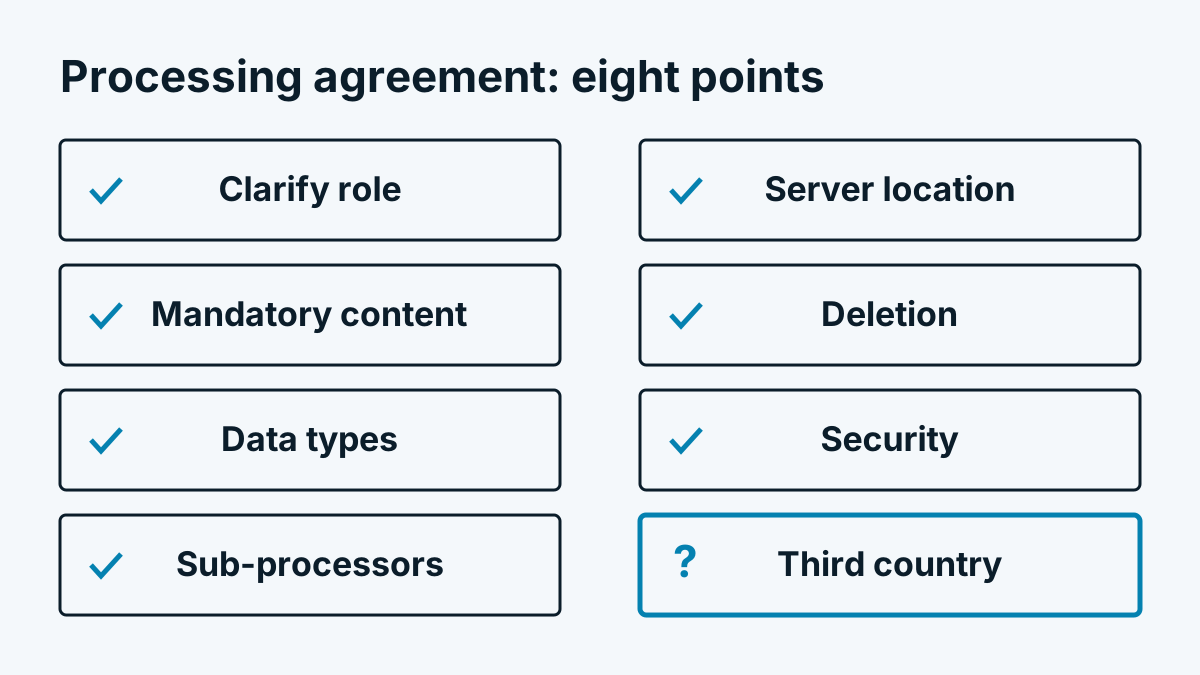
When you need a data processing agreement under Art. 28 GDPR, what it must contain and what to look for with analytics and marketing tools.
Practice
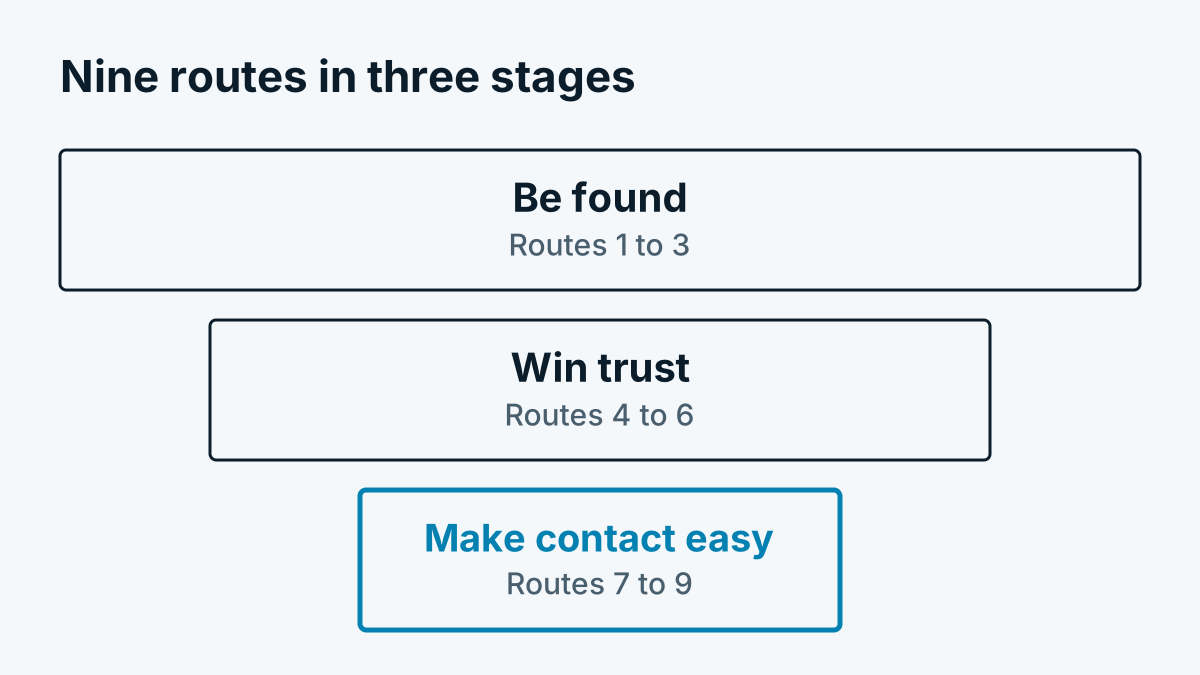
Winning B2B leads through your own website: nine ways from specialist articles and calculators to company visits, with effort, impact and legal position.
Comparison
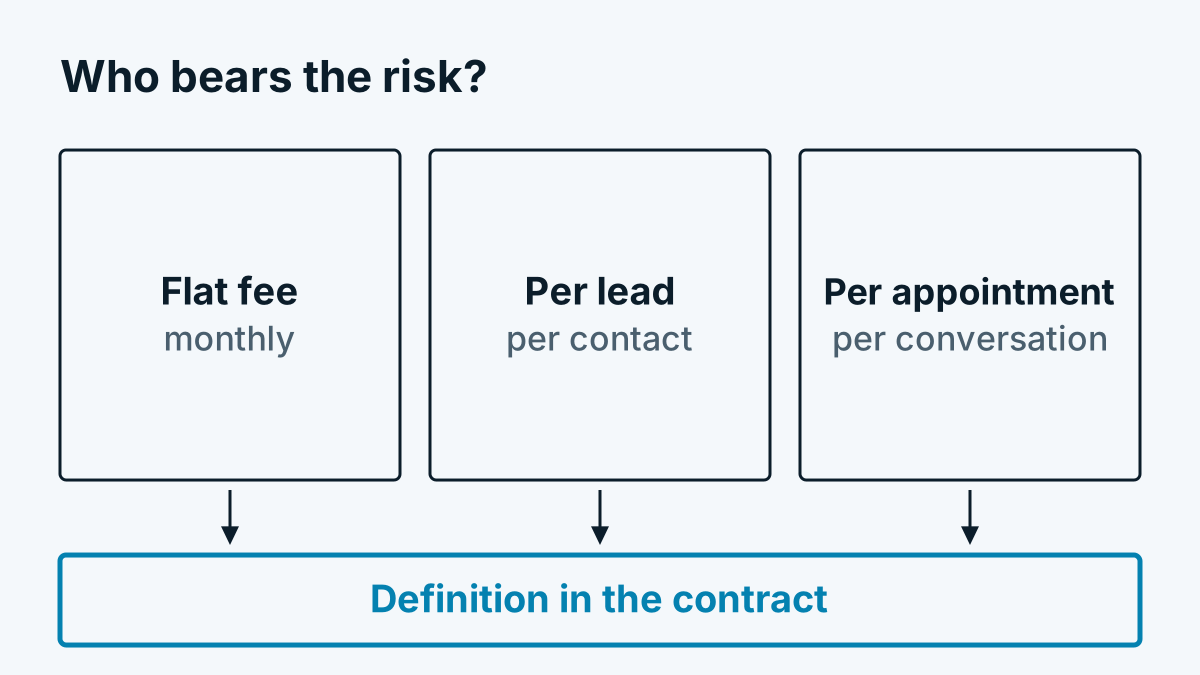
How to recognise a reputable B2B lead generation agency: contract models compared, warning signs and twelve questions for the first meeting.
Law
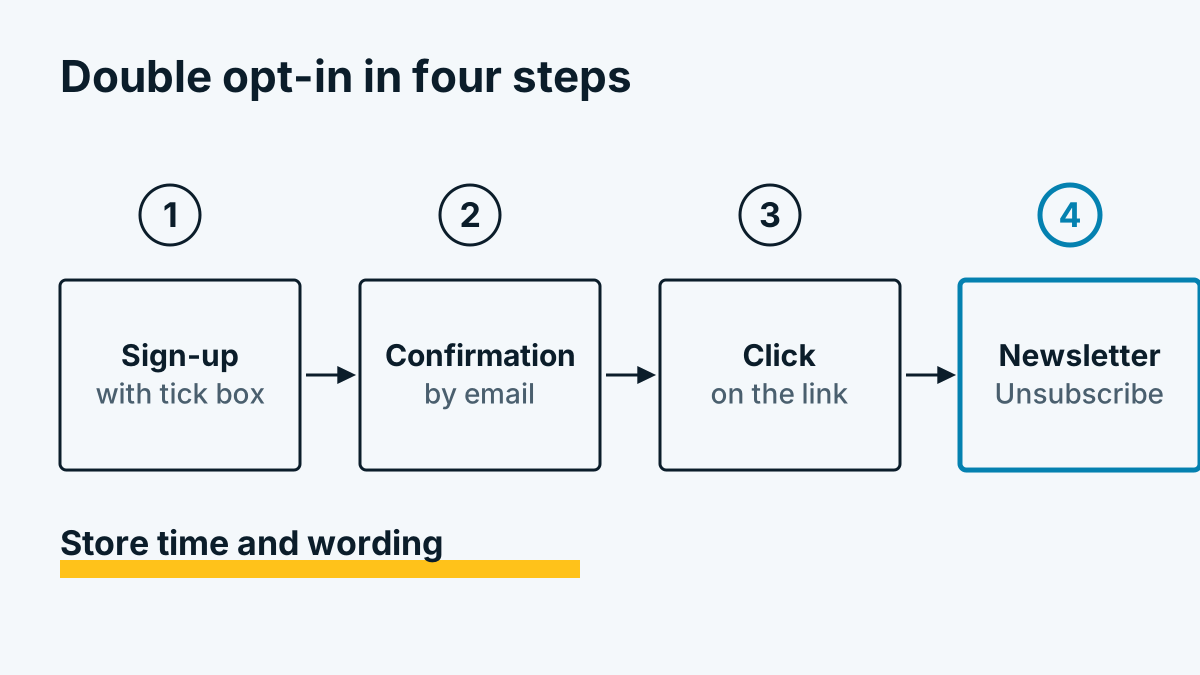
B2B newsletters under GDPR and UWG: consent, double opt-in, proof, existing customers, unsubscribing and labelling in DE, AT and CH, with sources.
Practice
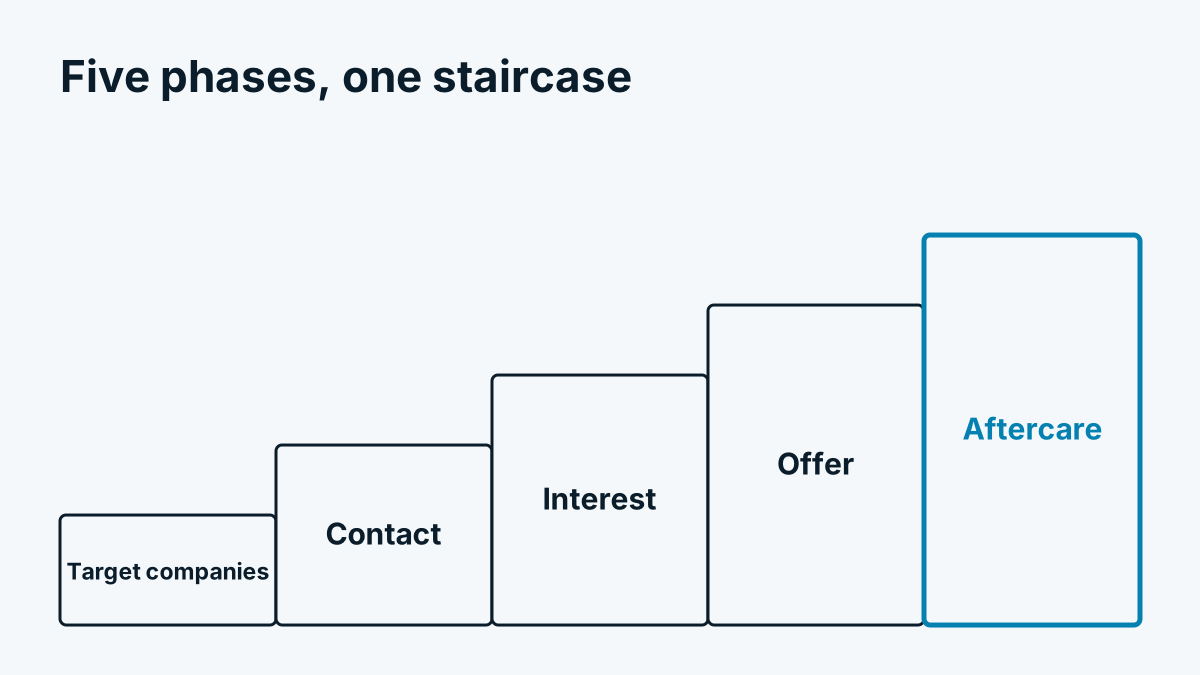
The stages of B2B sales from target list to aftercare and what the website can do at each stage. With a table and checking questions.
Law
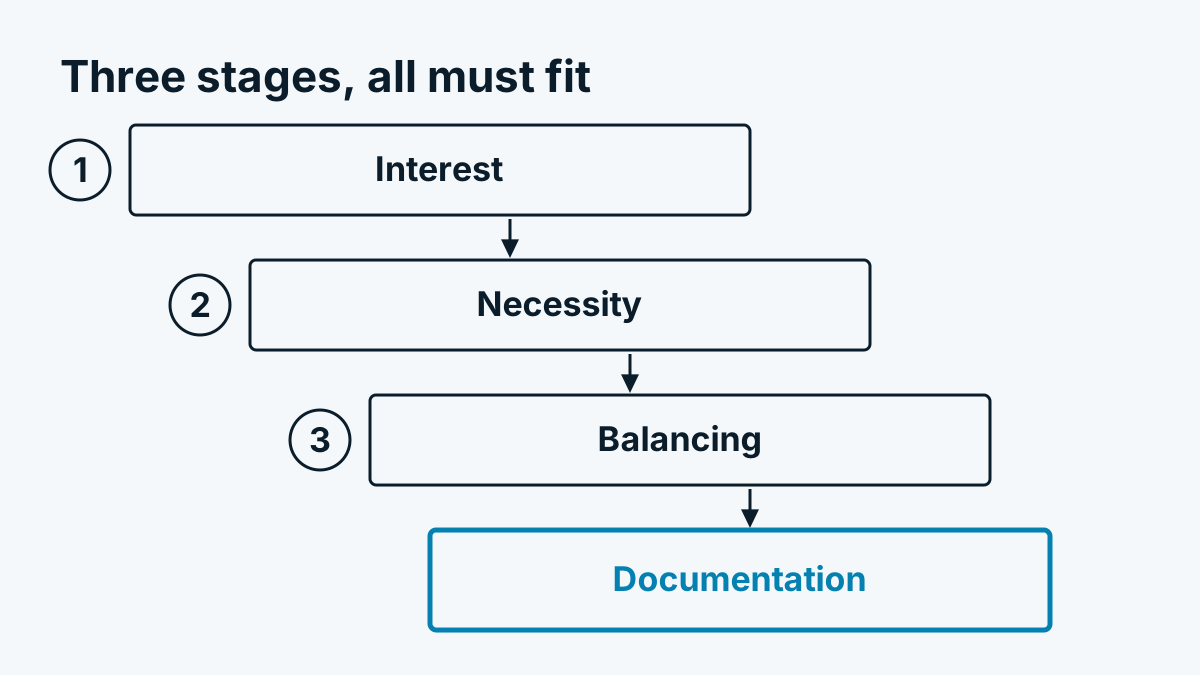
Art. 6(1)(f) GDPR explained: the three-step test, examples from marketing and sales, documentation and the right to object under Art. 21.
Law
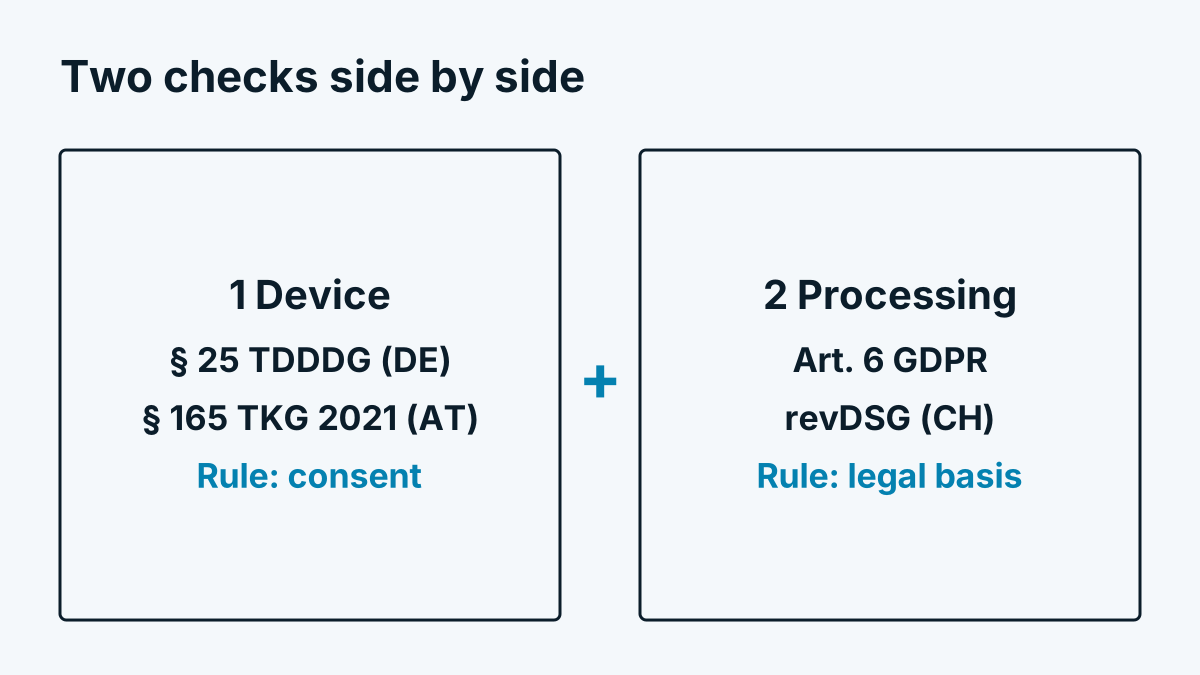
Visitor identification and GDPR in DE, AT and CH: two tests, consent or legitimate interest and a checklist for website operators.
Comparison
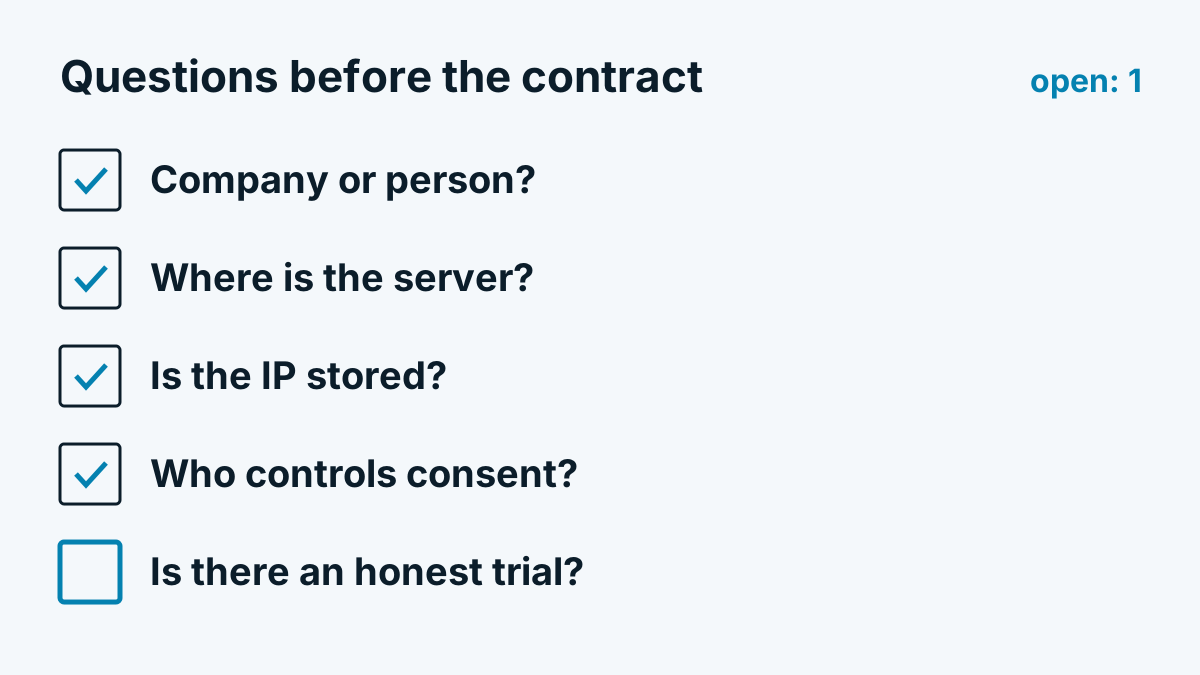
Twelve criteria for comparing visitor identification providers: a table with questions, warning signs and a clean two-week test.
Law
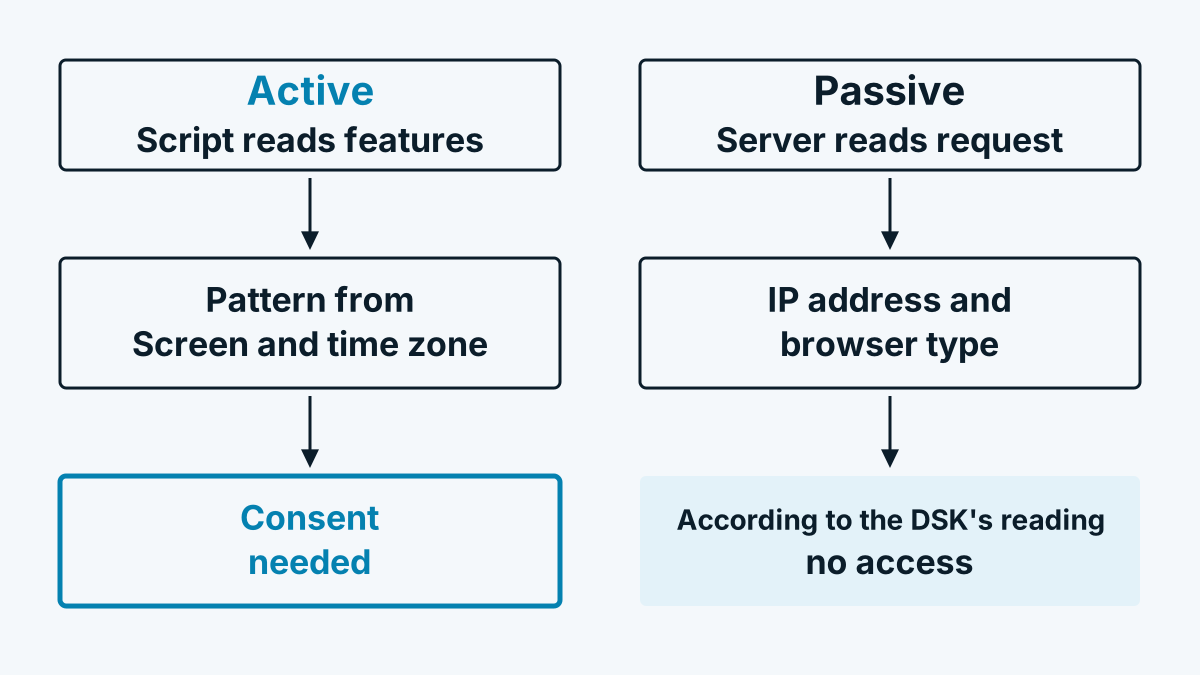
Browser fingerprinting explained: how it works, why § 25 TDDDG and § 165 TKG can apply even without a cookie and where the line to the server lies.
Basics
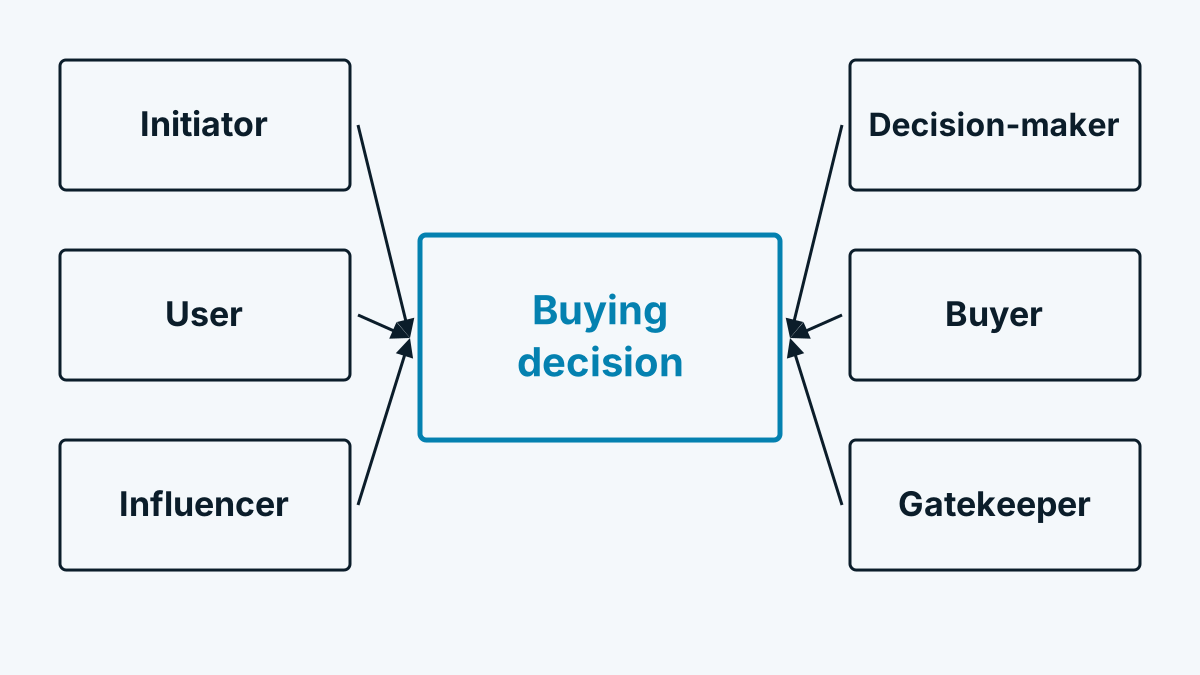
The buying centre according to Webster and Wind: the roles in B2B purchasing, what each role expects from your website and which content helps.
Law
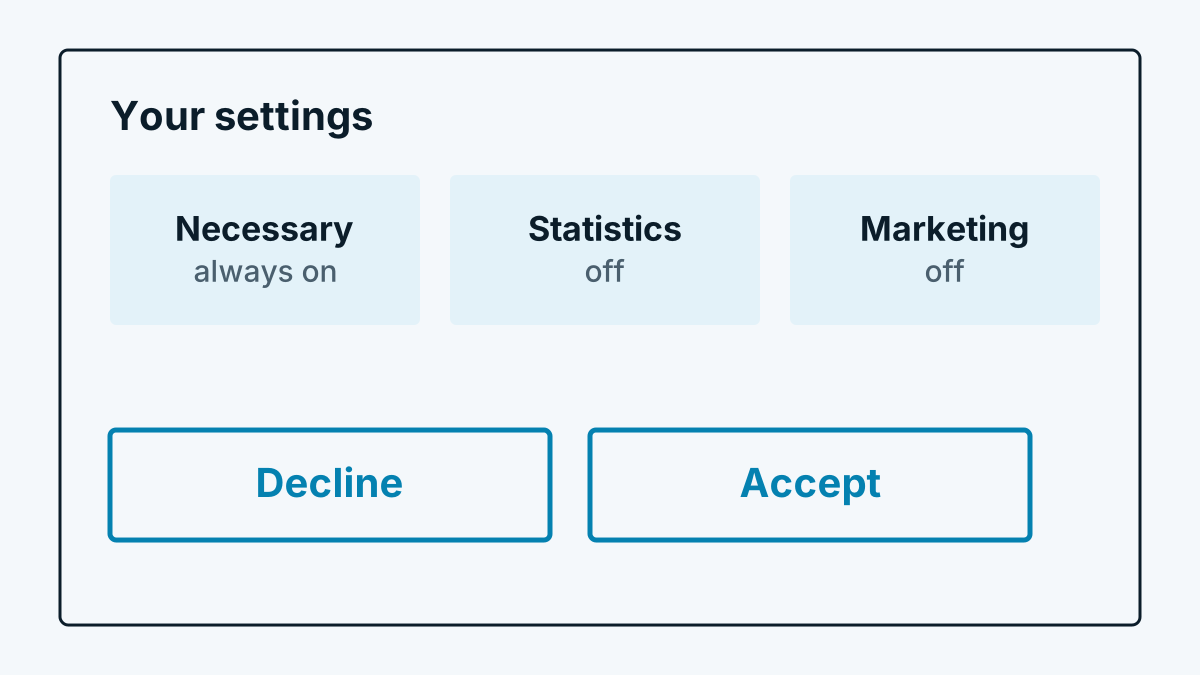
Setting up a cookie banner for B2B websites: categories, equal buttons, consent in the tag manager, withdrawal and documentation. With sources.
Law
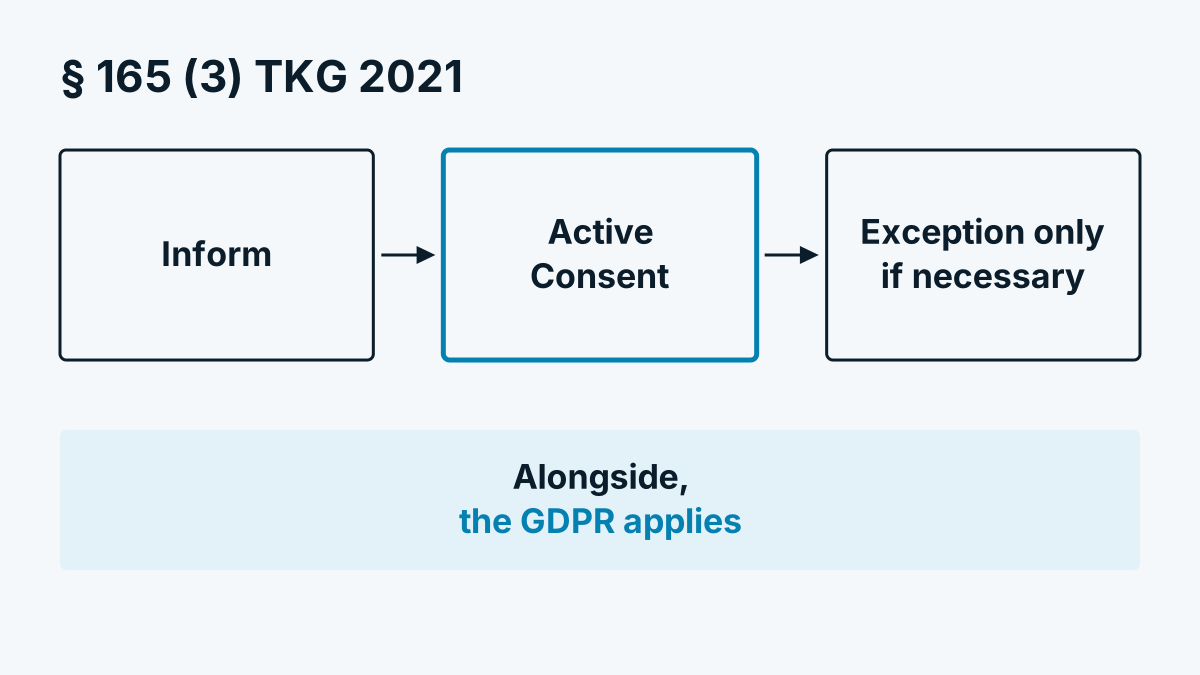
What § 165(3) TKG 2021 requires for cookies and tracking: consent, exceptions, interplay with the GDPR and who supervises in Austria.
Basics
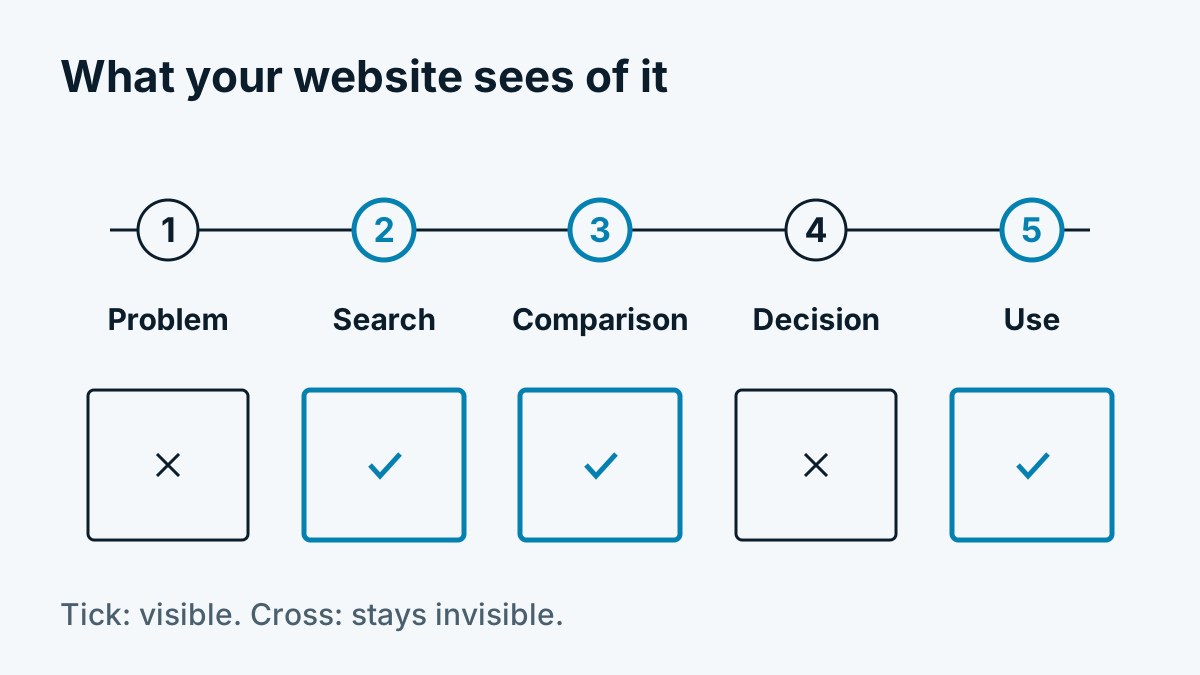
The B2B customer journey in five stages: touchpoints per stage, what can be measured on your website and what you will never see.
Comparison
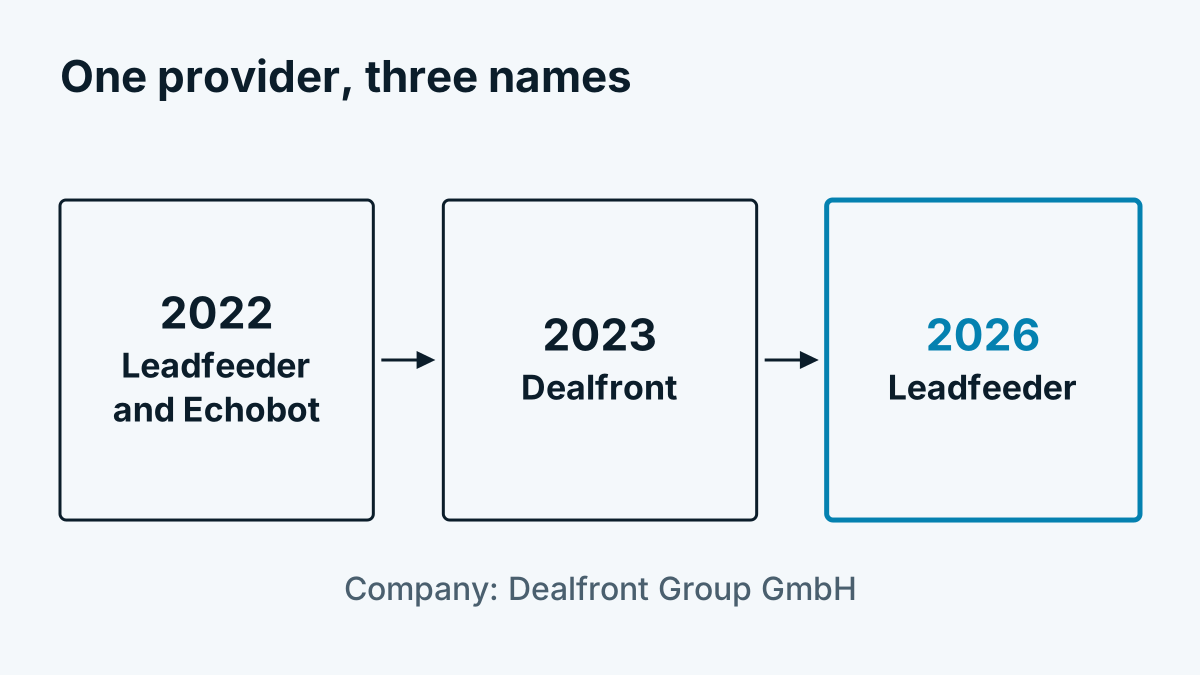
Leadfeeder and Echobot became Dealfront in 2023, and since 2026 the platform is called Leadfeeder again. What changed and what users should check.
Law
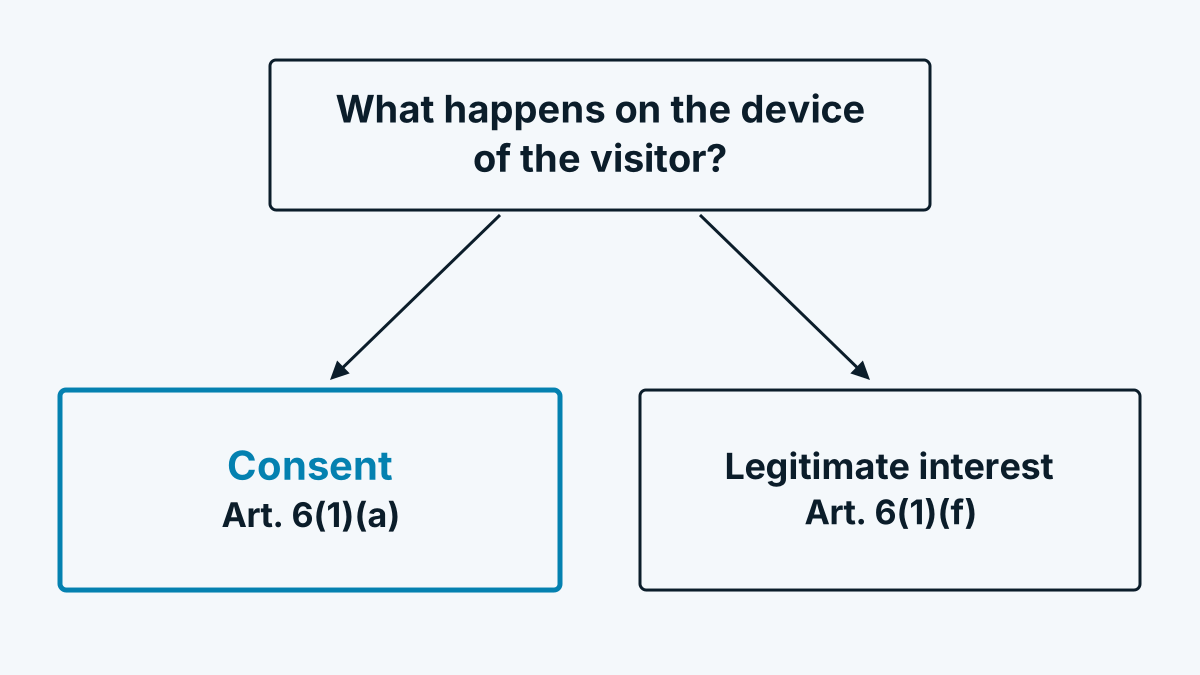
Consent or legitimate interest for visitor identification: what applies first, how the balancing works and a decision path in five questions.
Practice
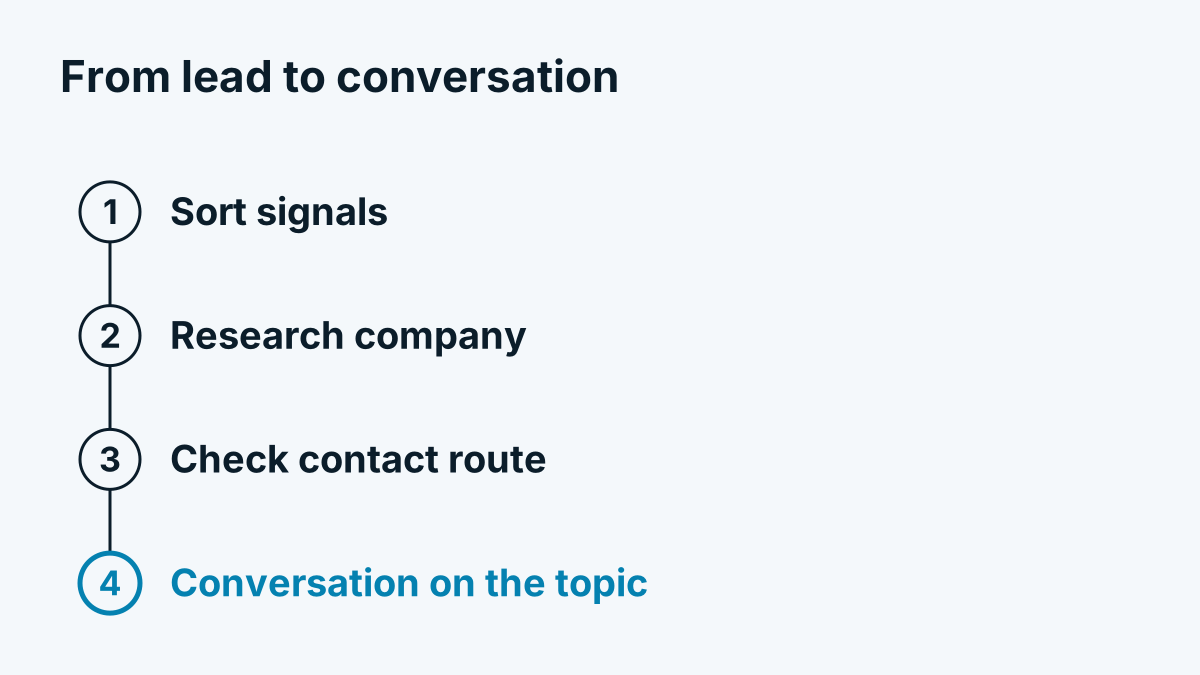
Approaching website visitors in B2B: ranking the signals of an identified company, researching contacts and staying legally clean at first contact.
Basics
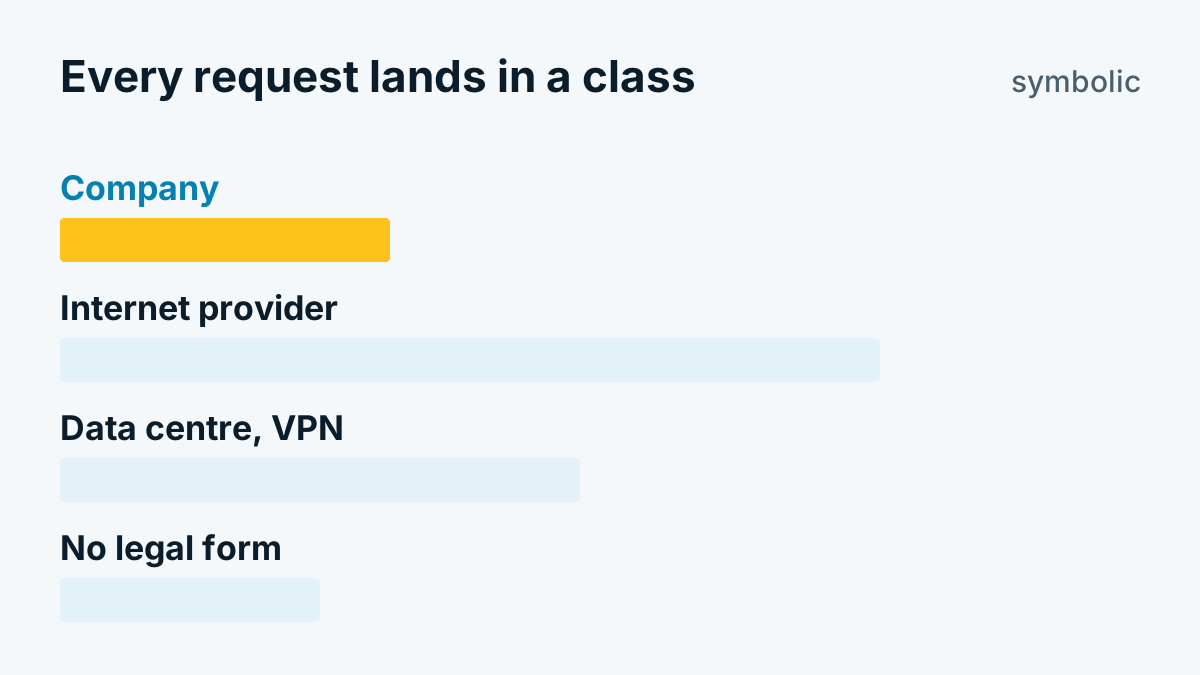
Providers quote very different identification rates. Seven factors explain the range. How to measure the figure for your own website.
Practice
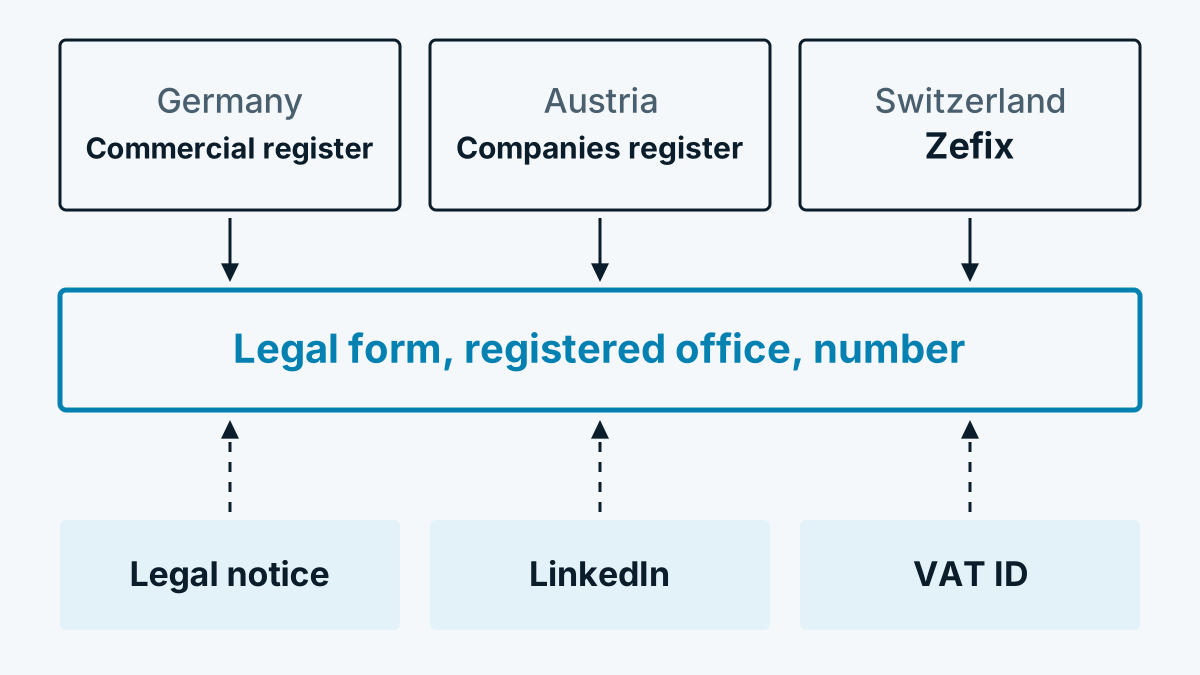
Researching company data for free in Germany, Austria and Switzerland: commercial register, Firmenbuch, Zefix, legal notice, LinkedIn and VAT ID check.
Comparison
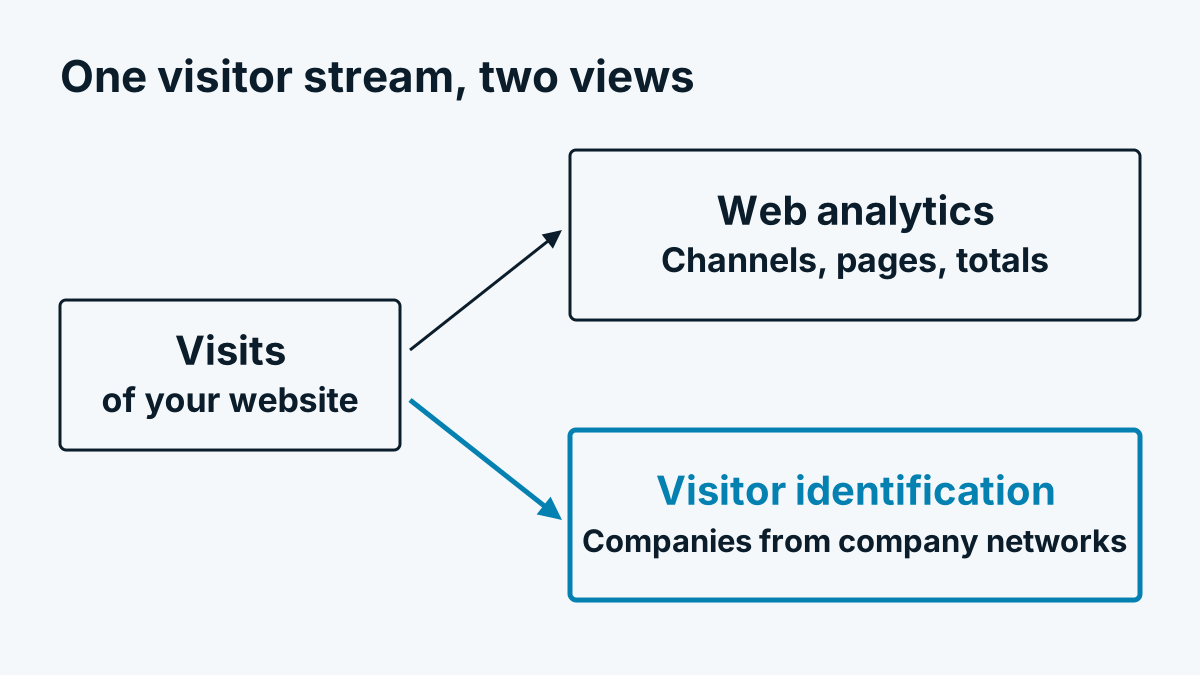
Does Google Analytics show which companies visit your website? A comparison of web analytics and visitor identification and how the two fit together.
Practice
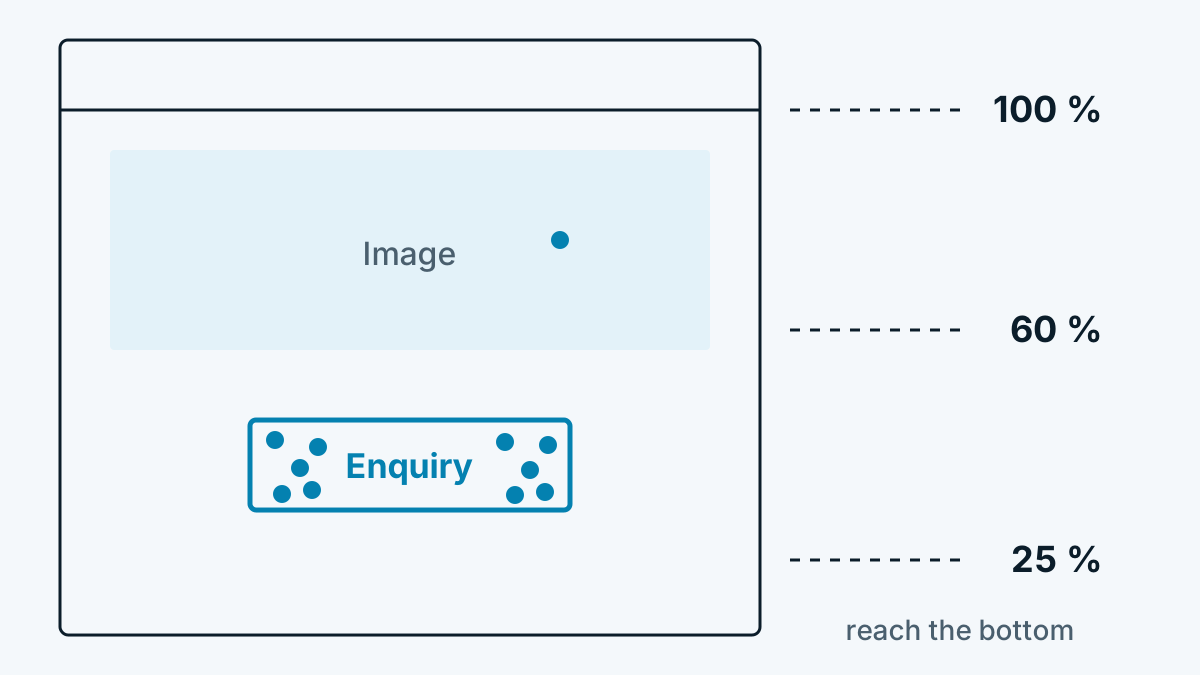
Click, scroll and movement heatmaps explained: what they show, how many visits you need, typical wrong conclusions and what data protection requires.
Technology
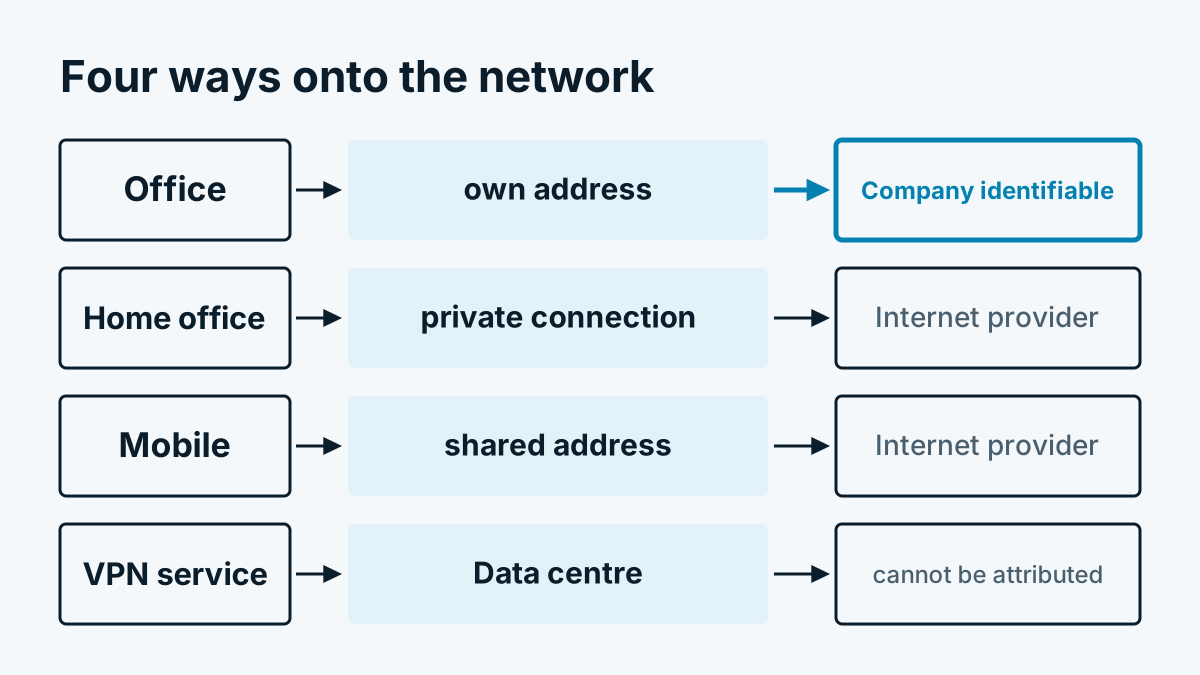
Why many company visits are missing in visitor identification: home office, shared mobile addresses, VPN and IPv6 explained clearly.
Practice
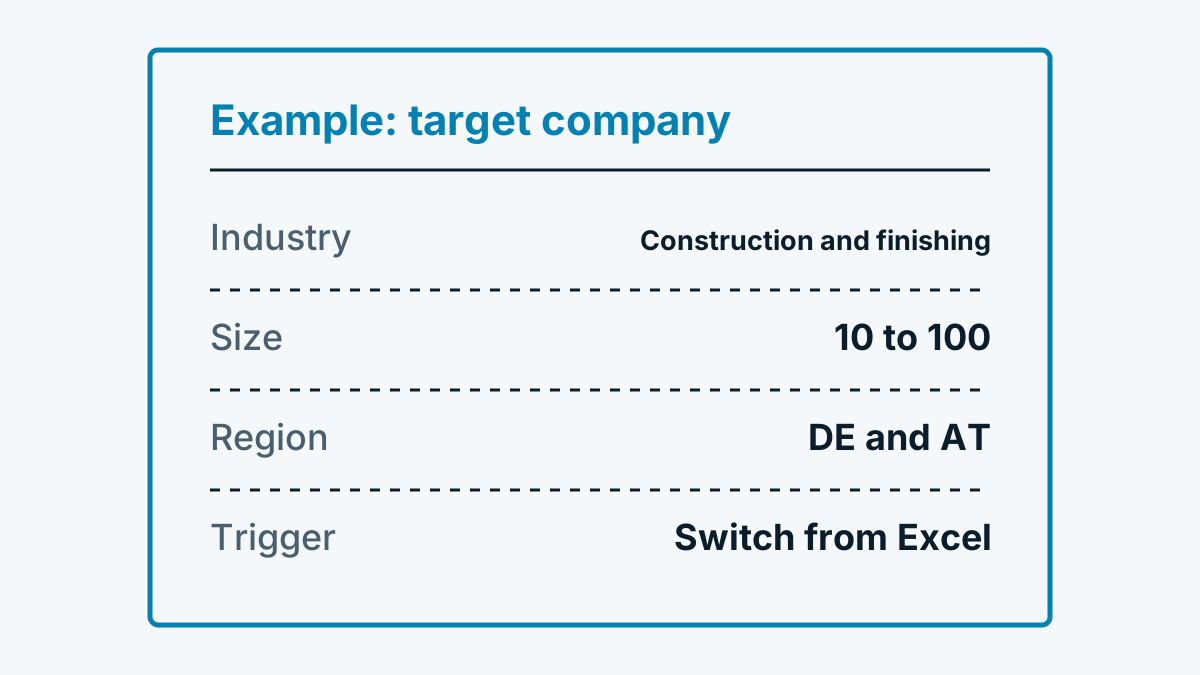
Derive an ideal customer profile (ICP) from your best existing customers: six steps, how it differs from a persona, and a template as a table.
Basics
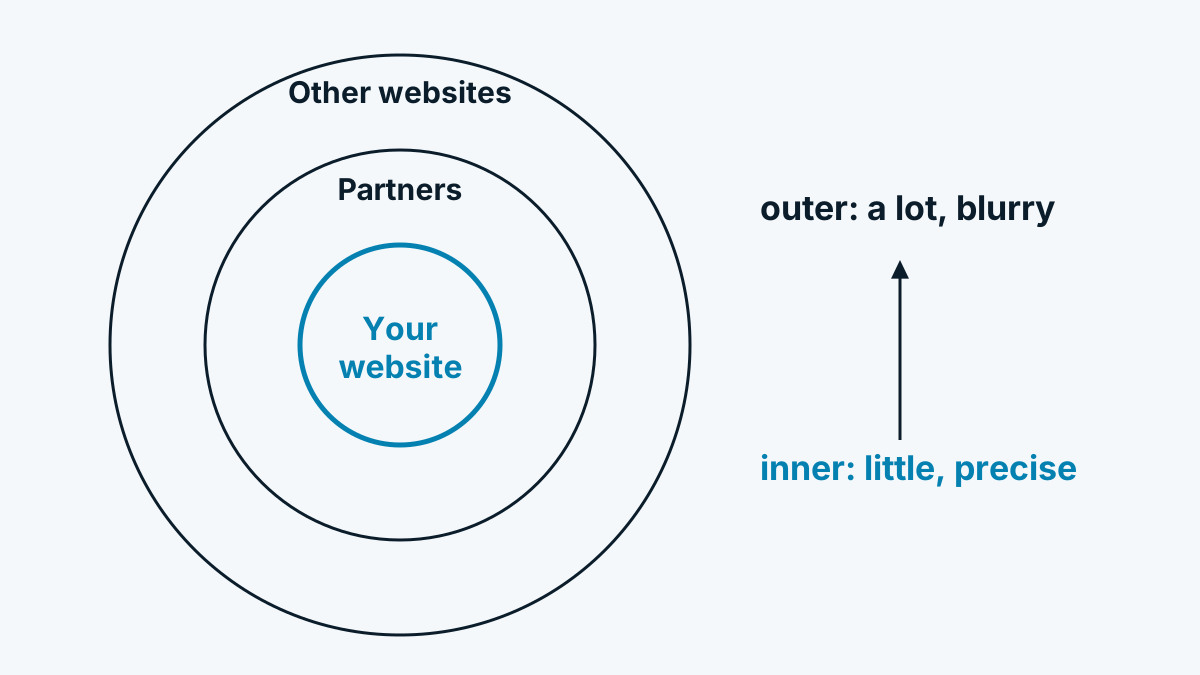
Intent data is meant to show which companies want to buy right now. What first, second and third-party data are, how good they are and what to check.
Law
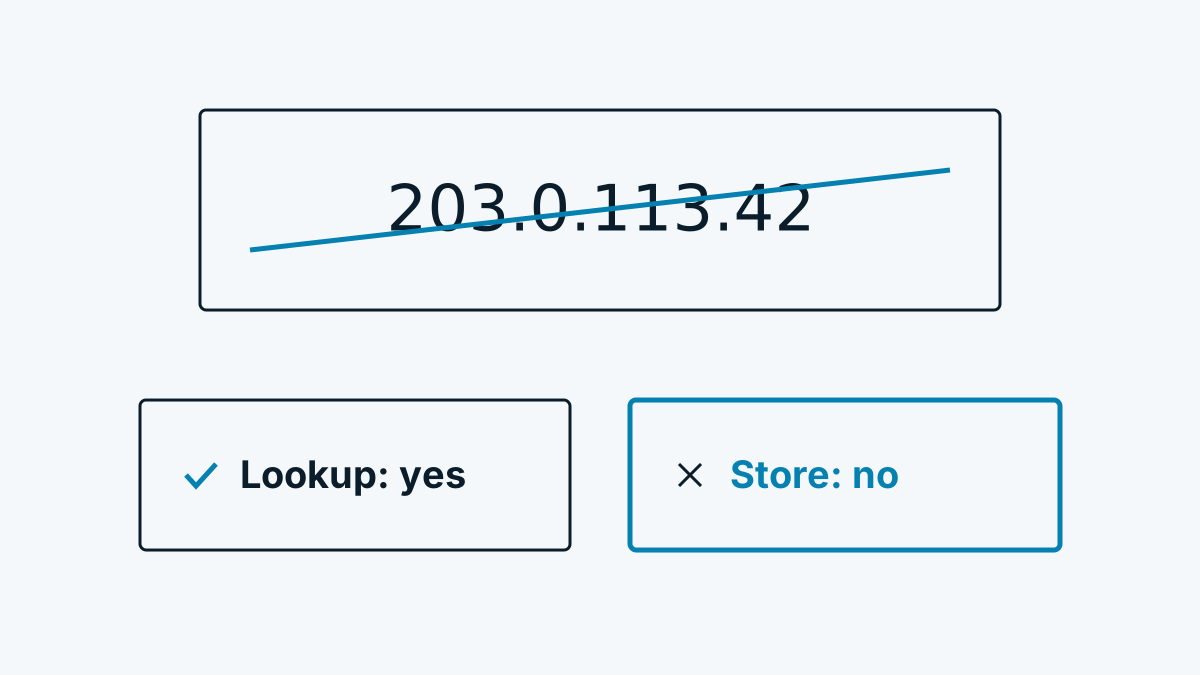
Is an IP address personal data? The Breyer ruling, means of identification and what it means for visitor identification tools.
Technology
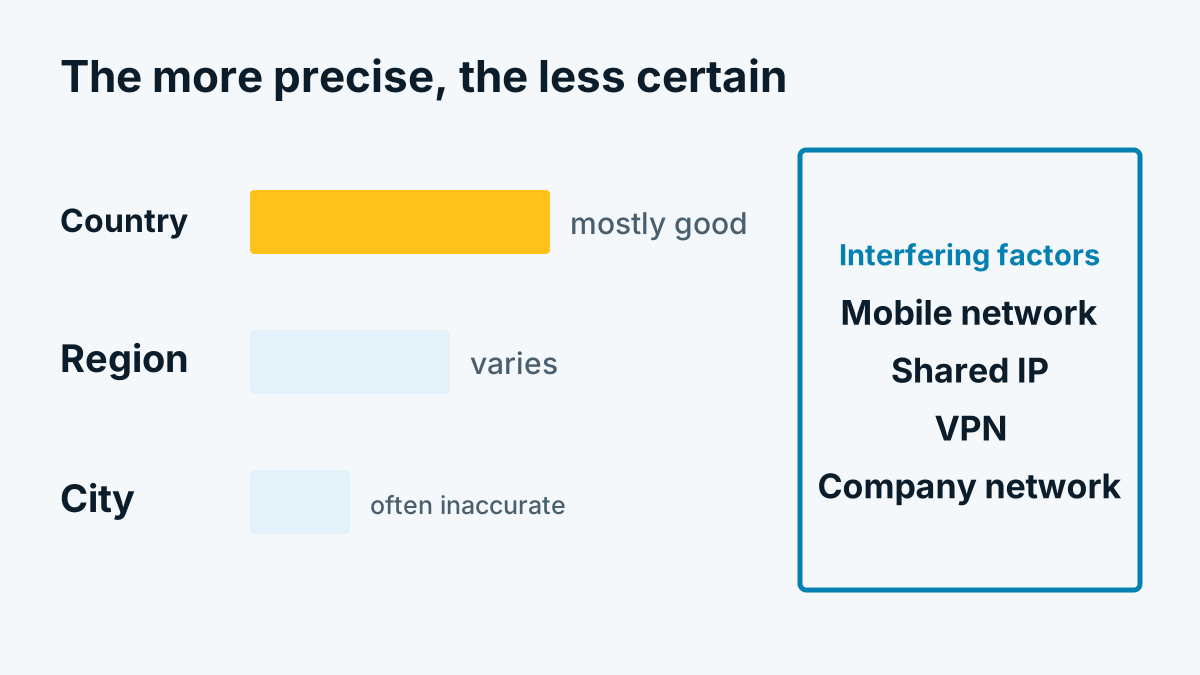
How GeoIP databases are built, how accurate country, region and city are, and why mobile networks, CGNAT and VPNs distort statistics and country blocks.
Technology
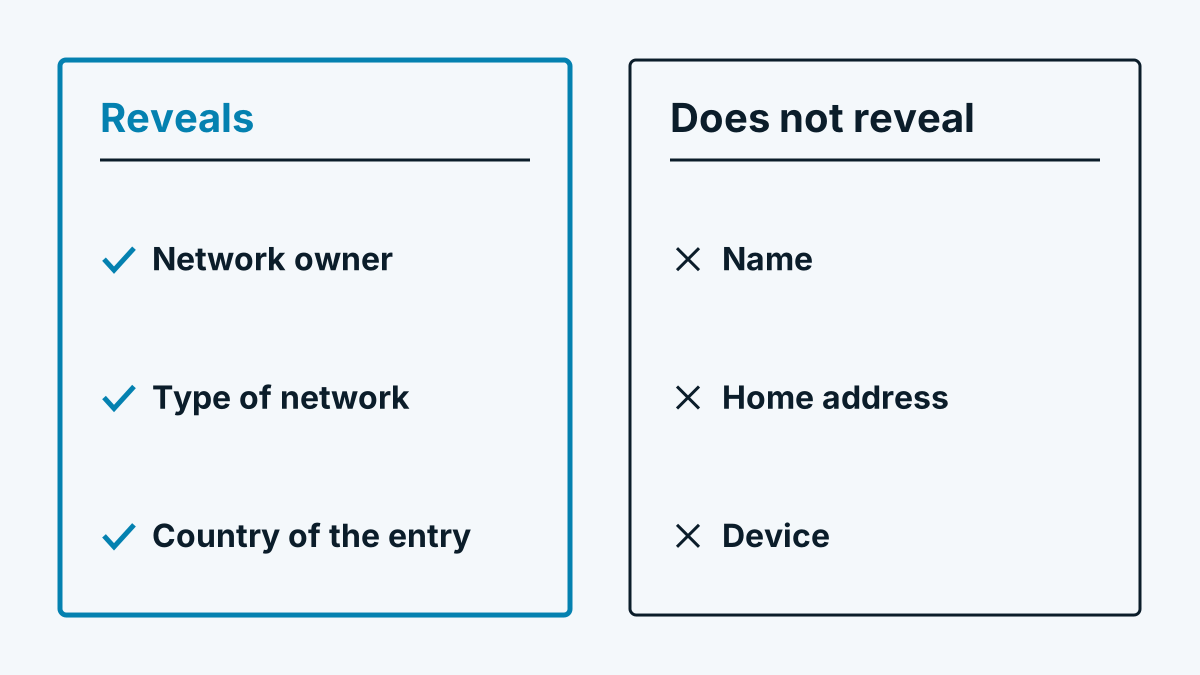
What can be read from an IP address and what cannot? Network holder, country, internet provider, company. With accuracy, limits and the legal framework.
Law
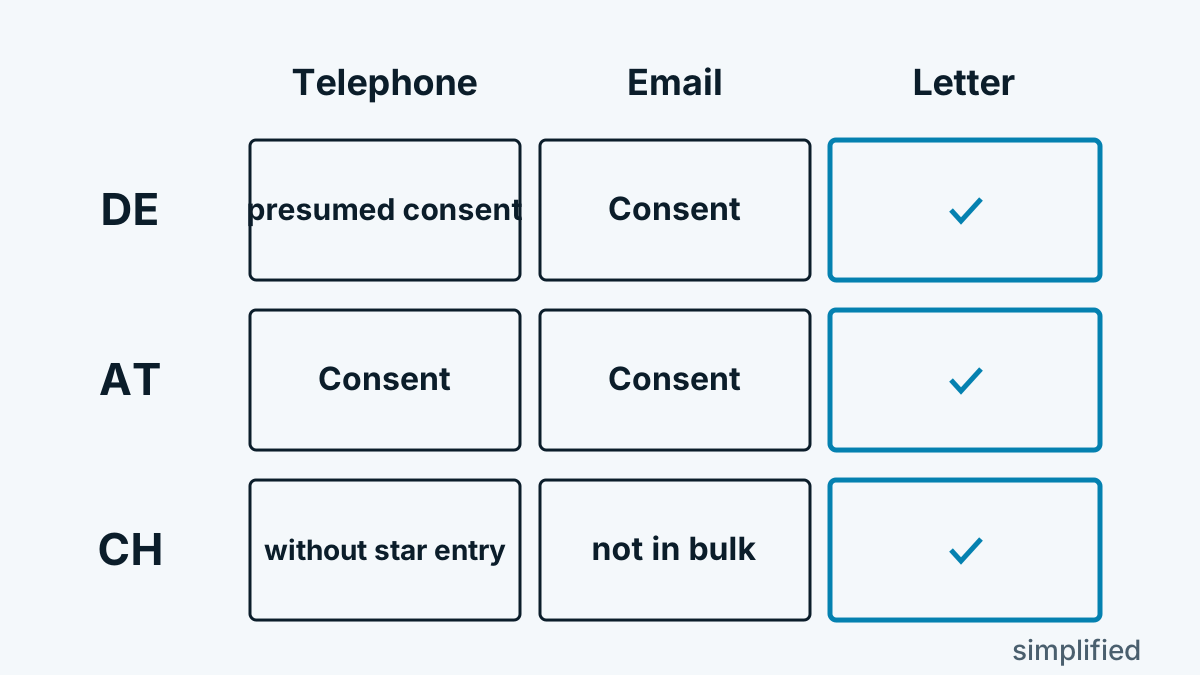
Phone, email, letter, LinkedIn: what is permitted in B2B cold outreach. The rules for Germany, Austria and Switzerland in one table.
Practice
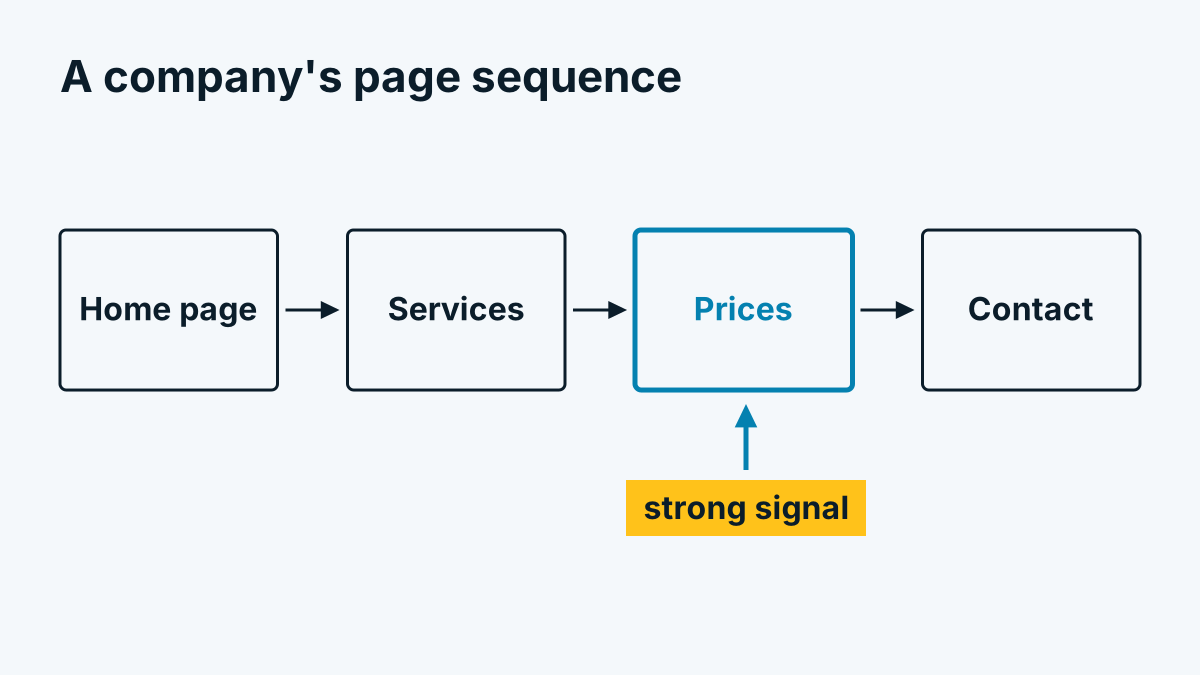
Spot buying interest on your website: which page views, clicks and returning visits count, and how to rate company visits with a points scheme.
Practice
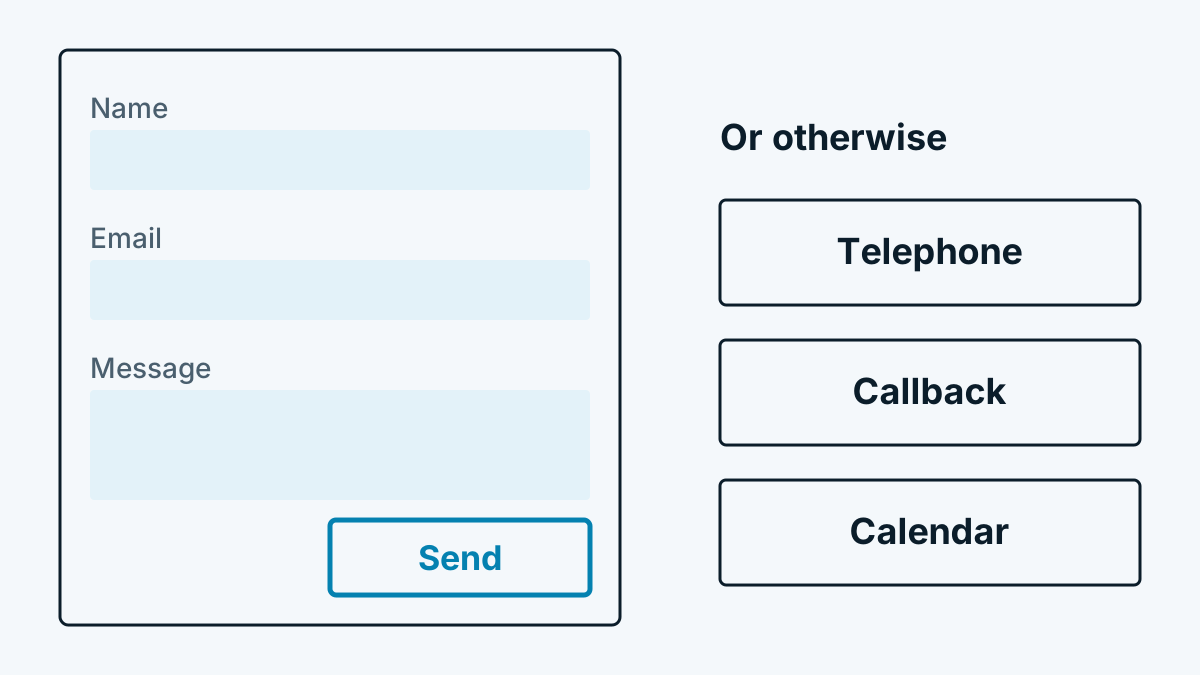
Contact form for B2B websites: which fields, required information, privacy notice, spam protection without captcha, confirmation and alternatives to the form.
Practice
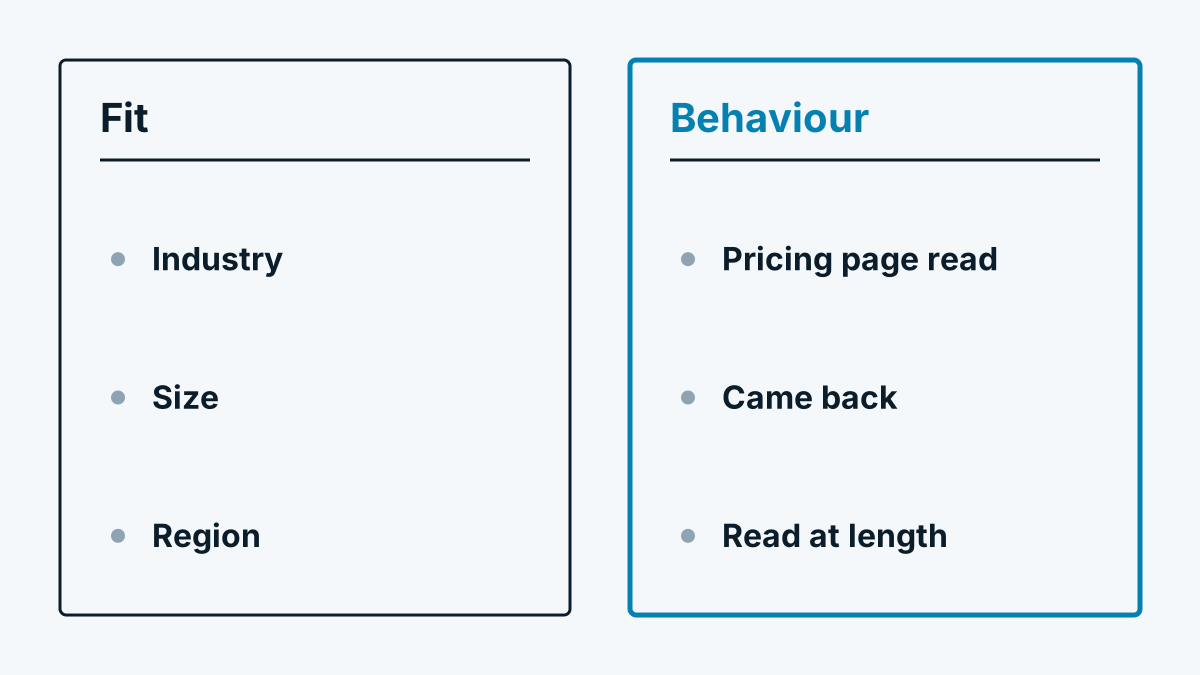
Lead scoring without expensive software: a points model of fit and behaviour, with an example table, thresholds and a monthly check.
Practice
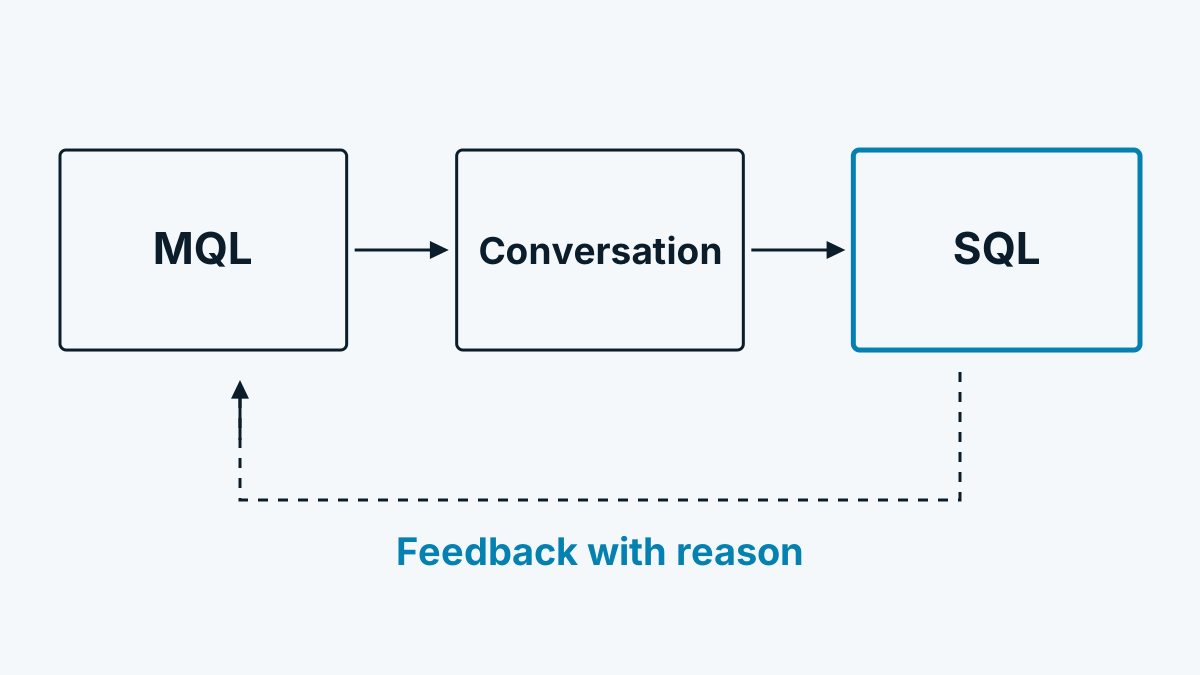
What MQL and SQL mean, how to set criteria, regulate the handover with an agreement and keep improving with a feedback loop.
Technology
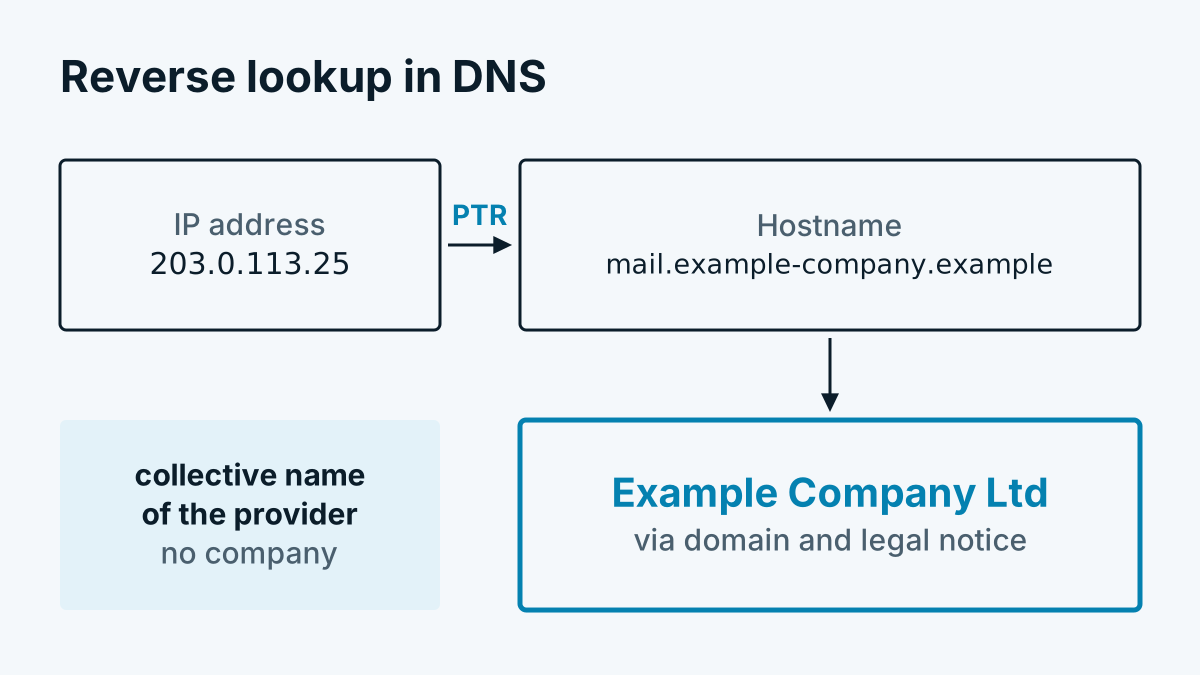
The PTR record assigns a host name to an IP address. How to read it, recognise generic names and get from the domain to the company.
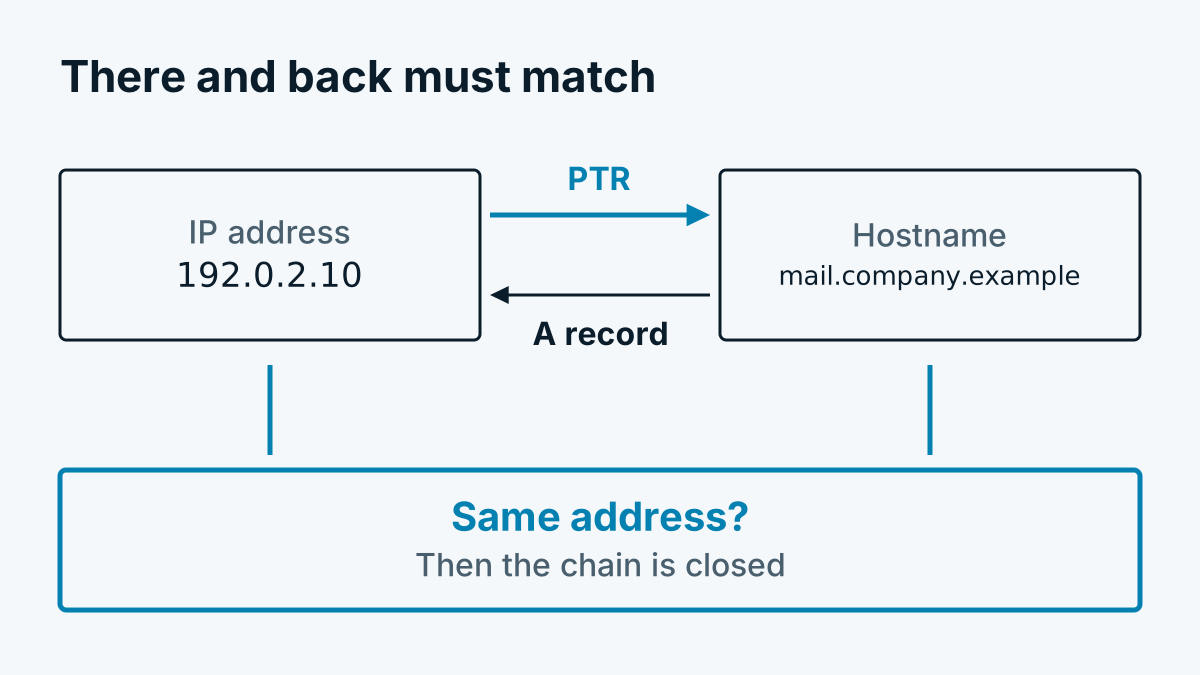
Technology
How to check the reverse DNS record of an IP address with dig, host and nslookup, have it set by your provider and meet mail server requirements.
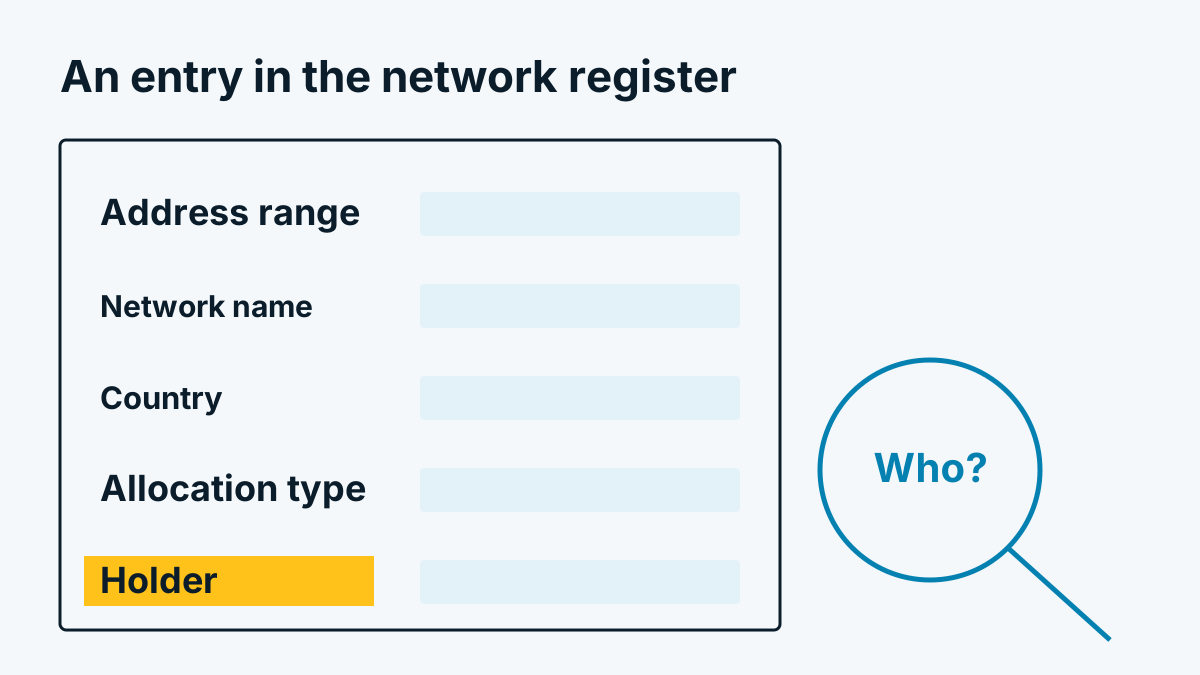
Technology
Reverse IP lookup means three different things. Here is what Whois, RDAP and PTR do, who maintains the registries and where the limits lie.
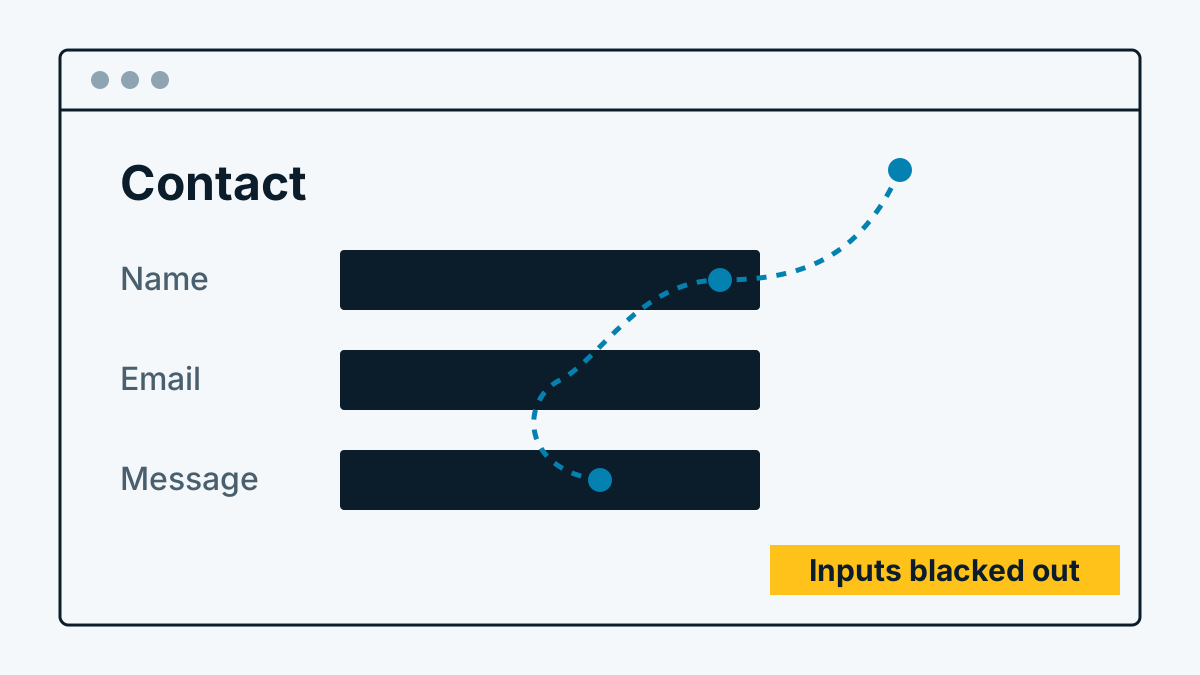
Law
Session replay shows how visitors use a page. Where it helps, where the data protection risks lie and which safeguards you need.
Basics
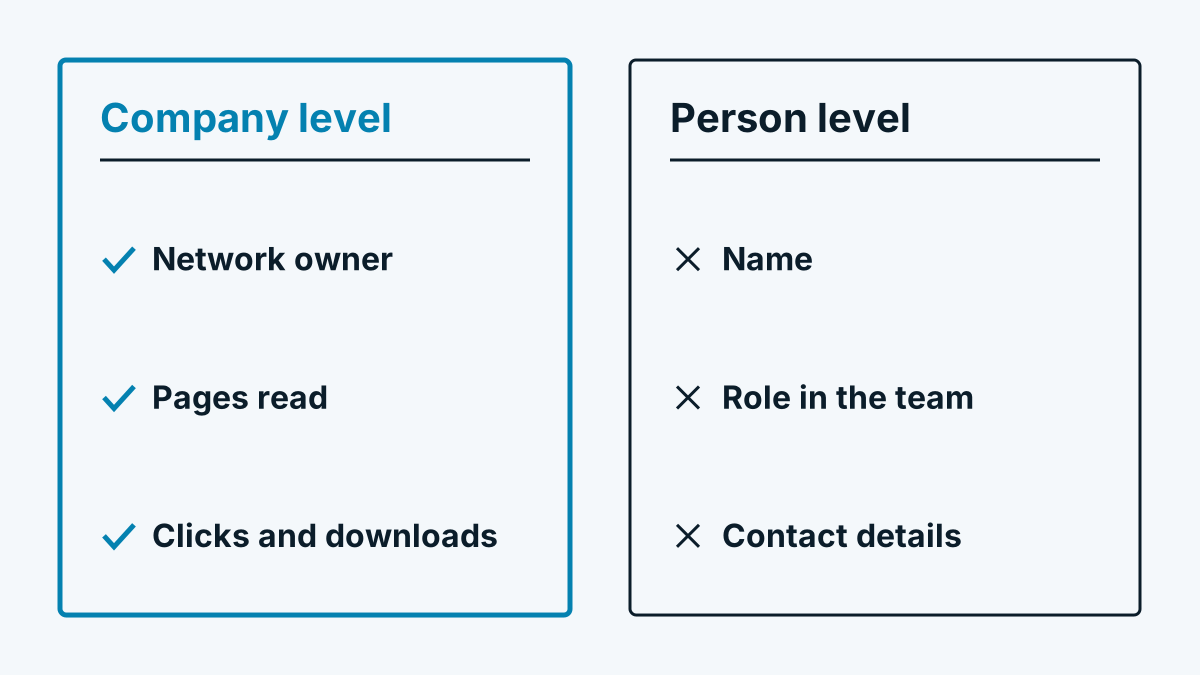
Visitor identification shows companies, not people. What the data tells you, where it can mislead and which expectations to set before you start.
Comparison
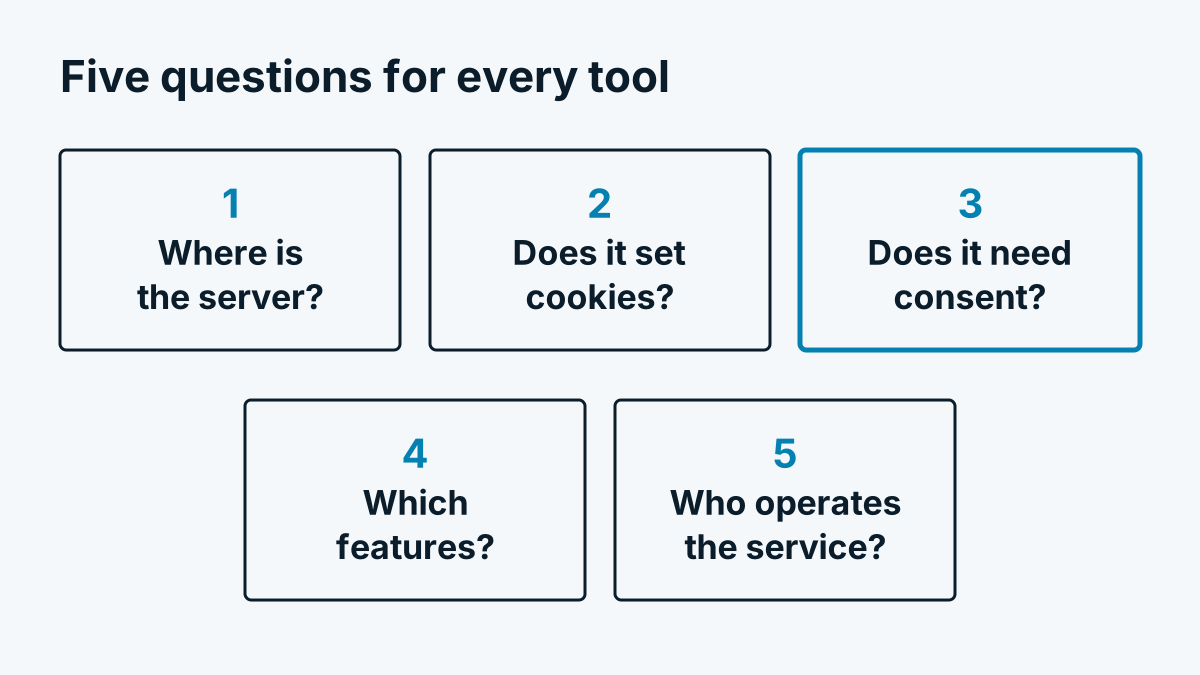
Matomo, Plausible, Fathom, Piwik PRO, etracker and log analysis at a glance. With criteria such as server location, cookies, consent and features.
Technology
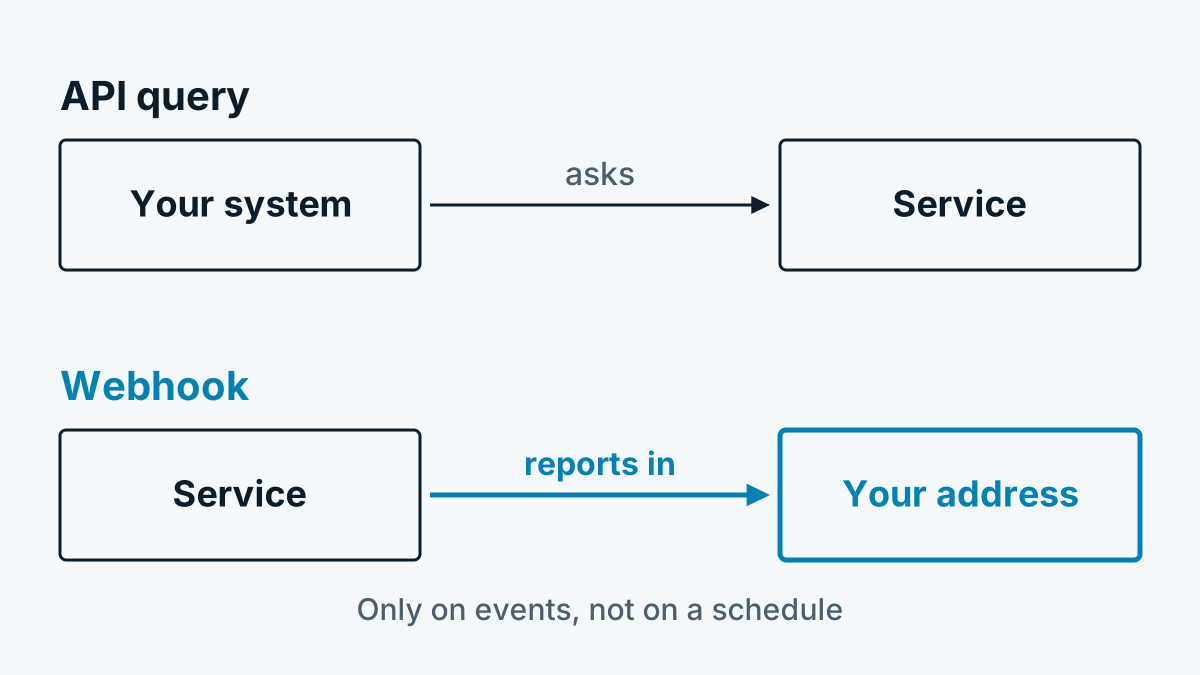
What a webhook is, how it differs from an API query and how to handle signature, retries and duplicates. With curl and Node.
Practice
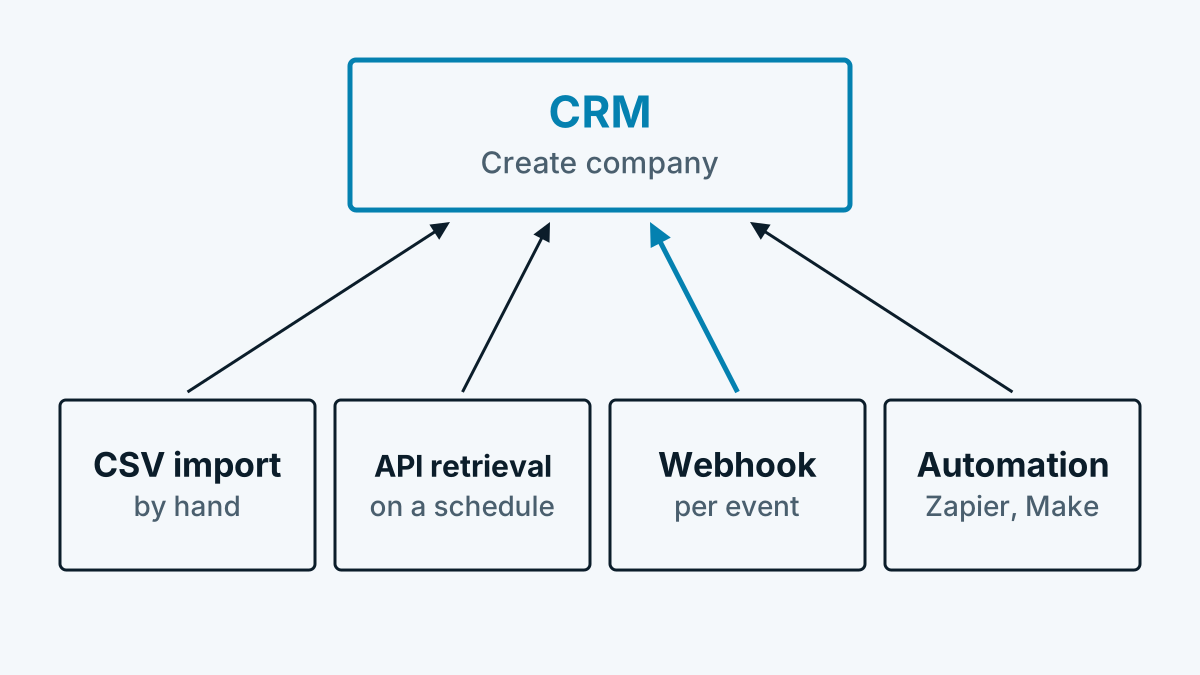
How identified company visits get into HubSpot, Salesforce or Pipedrive: CSV import, API, webhook and automation services. With field mapping and duplicates.
Basics
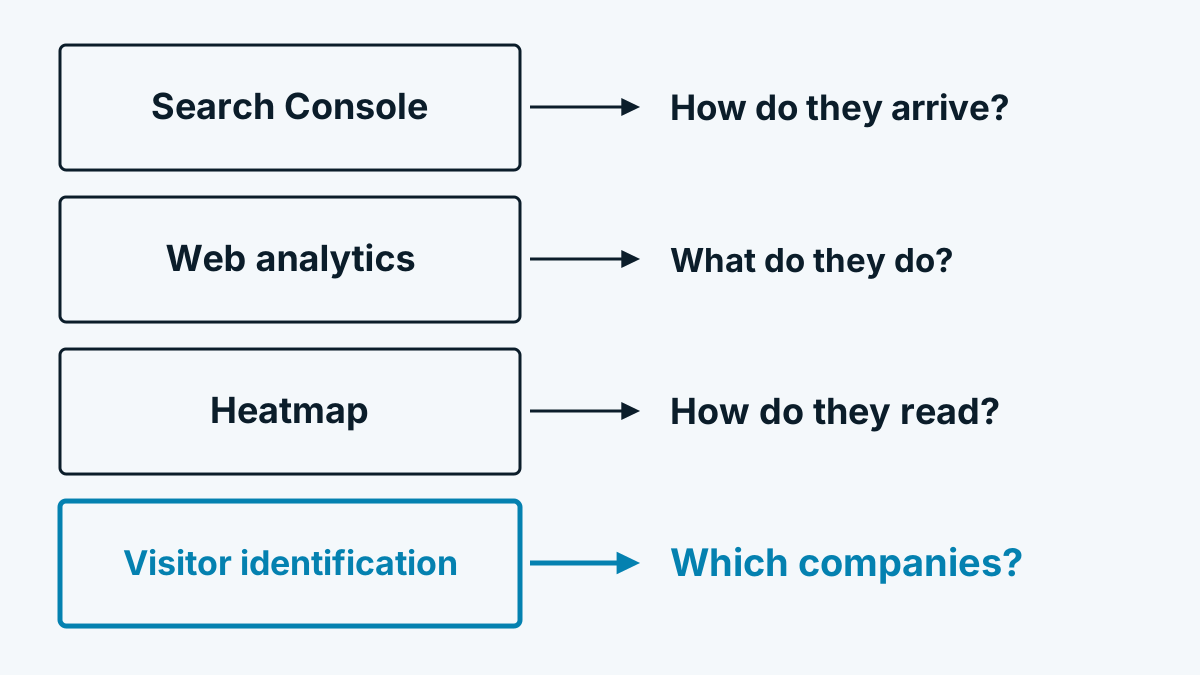
Page views alone say little in B2B. Which metrics count, which tools answer which question and a plan for the monthly report.
Practice
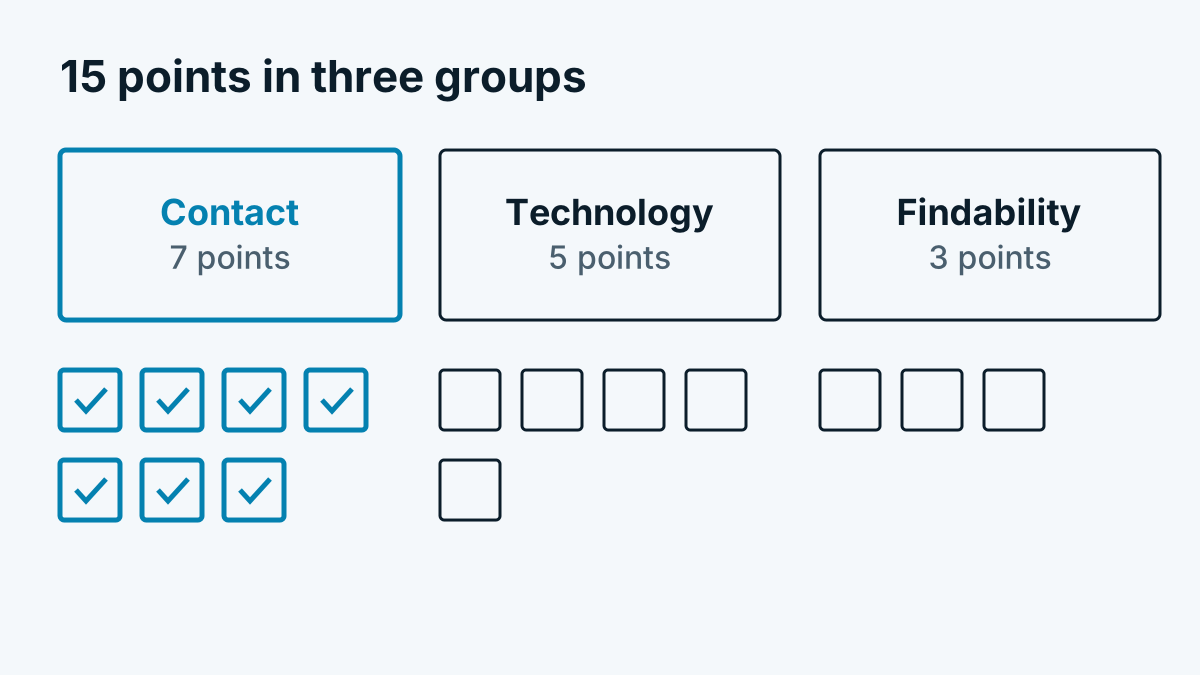
A B2B website check in 15 points: contact routes, load time, mobile, references, legal notice, form, search. With free ways to test each point.
Law
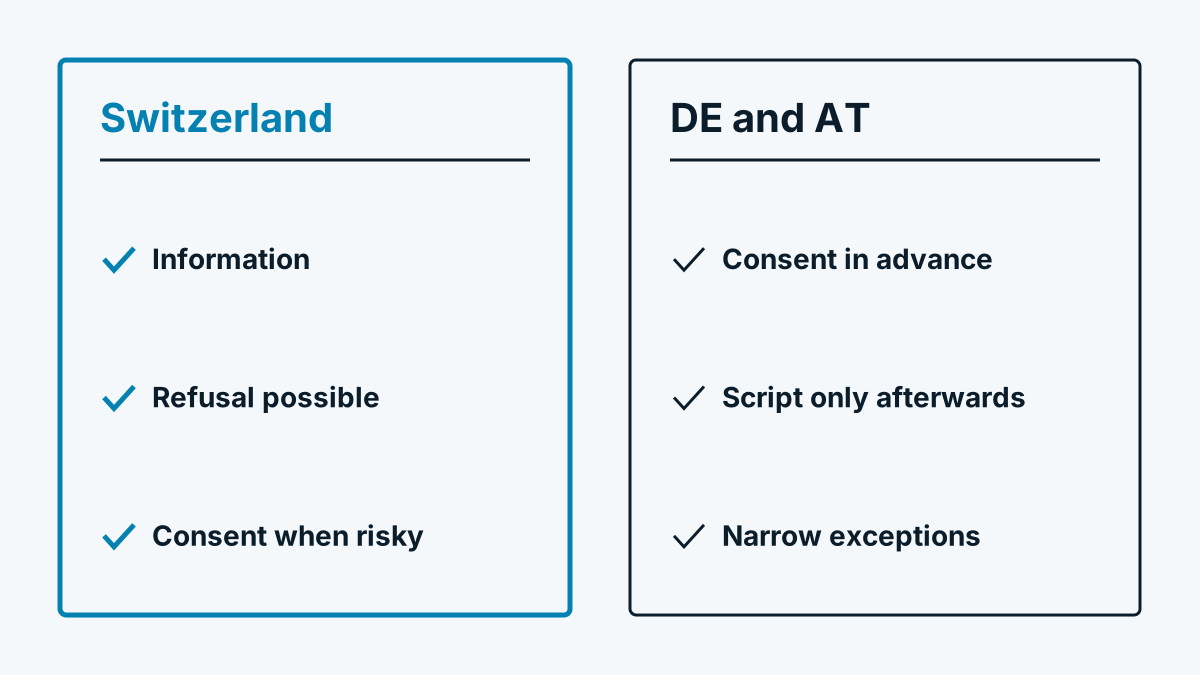
What applies to cookies and tracking in Switzerland: revDSG since 1.9.2023, Art. 45c FMG, duty to inform under Art. 19 DSG and when the GDPR also applies.
Basics
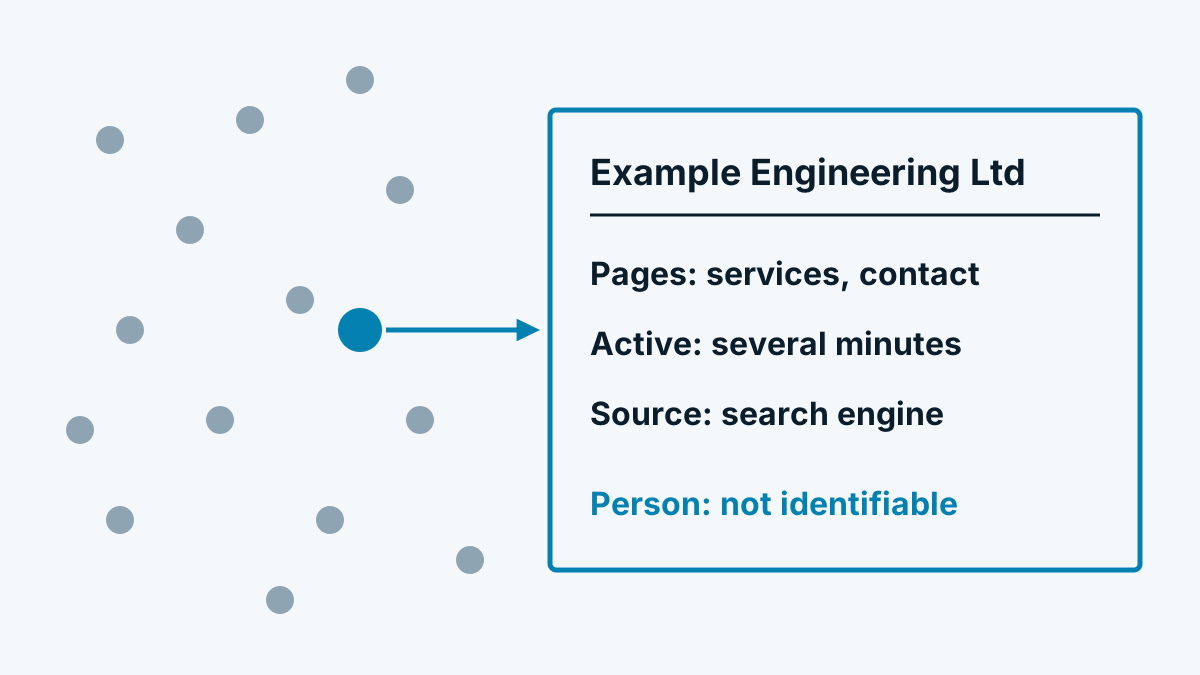
Three ways to identify the companies behind website visits: form, login and assignment via the network. What you learn and what you do not.
Technology
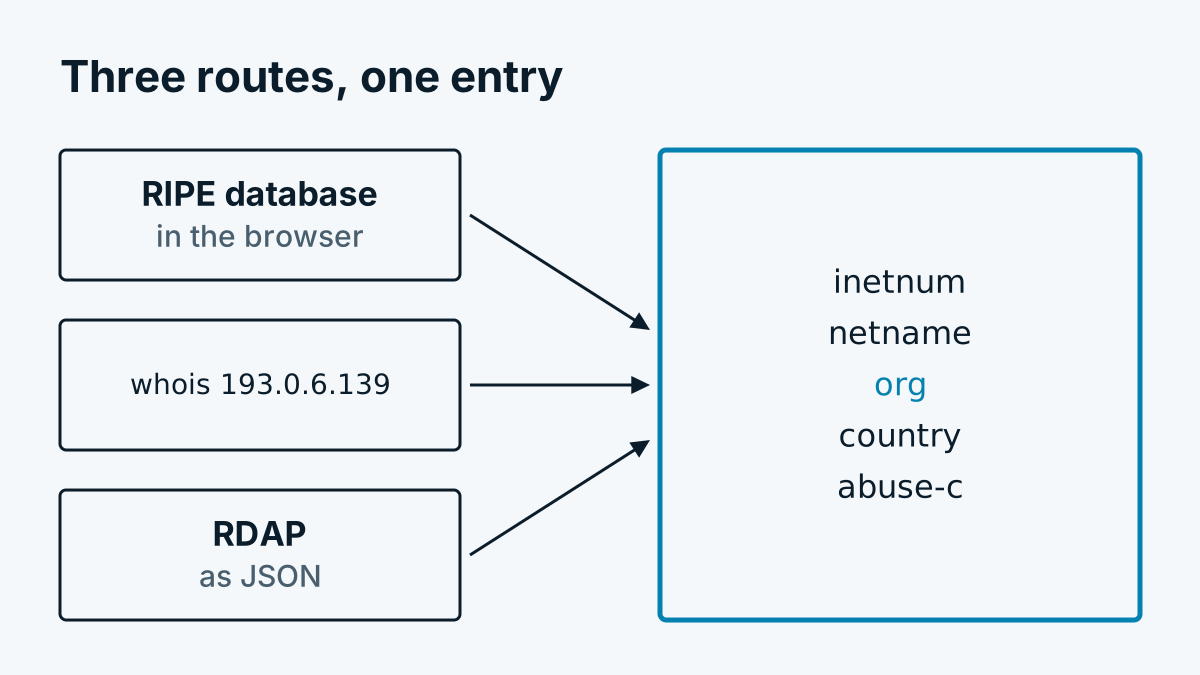
You can find the holder of an IP address free of charge in the network registry. A guide to Whois, RDAP and the RIPE database, with an example and the fields explained.
Practice
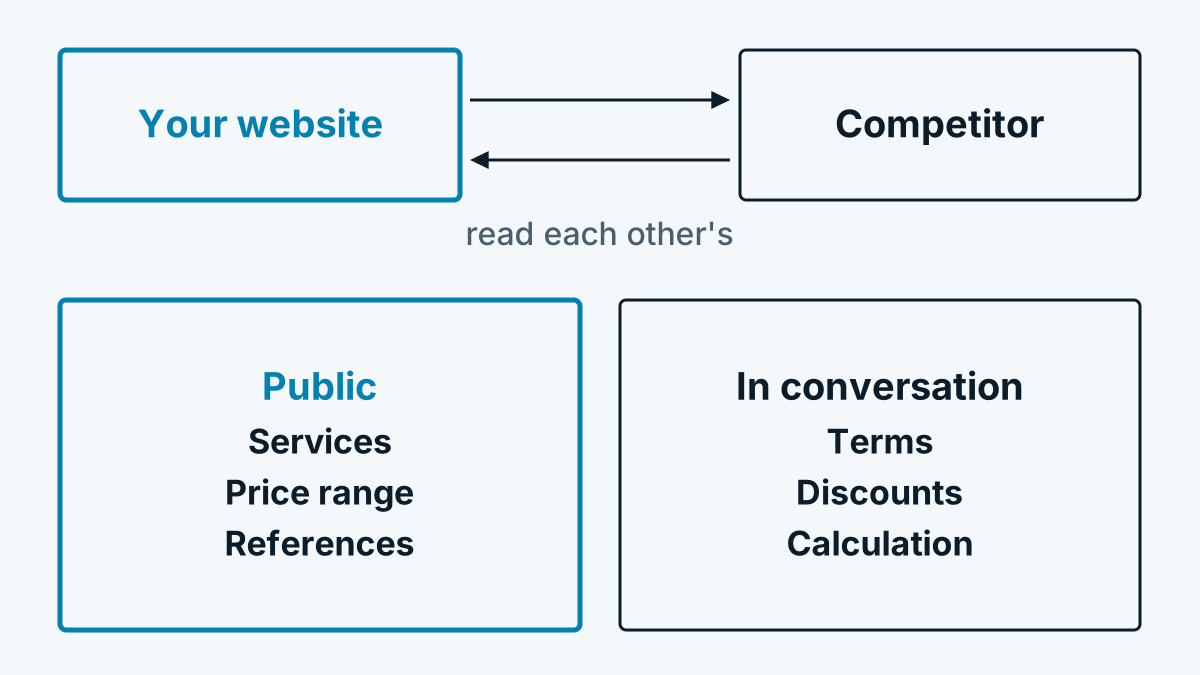
Competitors read your website too. How to spot them in company visits, what you show publicly and how to observe competitors properly yourself.
Technology
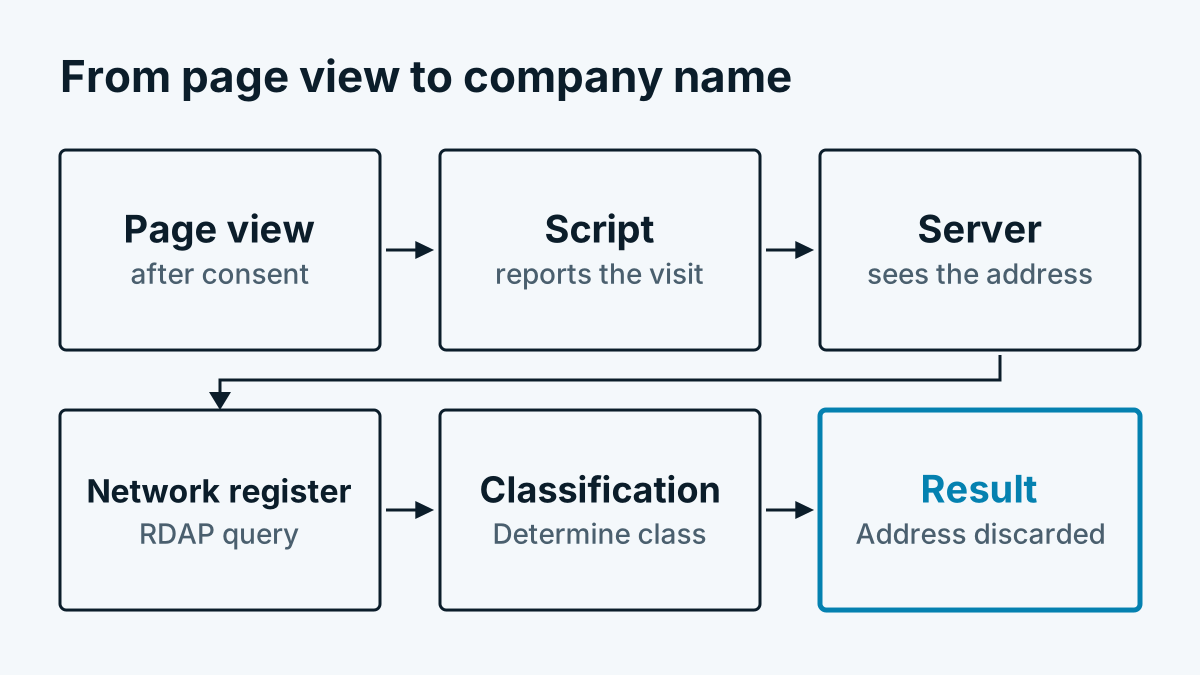
What happens between a page view and a company name: the process in six steps, the classes of classification, caching and data protection.