Comparison · 7 November 2026 · 4 minute read
Visitor identification providers: Leadfeeder, SalesViewer and others
Which providers identify companies on websites, where they come from and how they differ. A factual market overview with sources instead of a ranking.
Anyone looking for software that shows the companies behind website visits quickly finds half a dozen well-known names. Many comparison sites on the web are rankings by providers who put themselves in first place. We do not want that. We are a provider too. That is why you will find only statements here that can be checked with one click. There is no verdict on who is „the best“.
The well-known providers
| Provider | Company and headquarters | What stands out | Source |
|---|---|---|---|
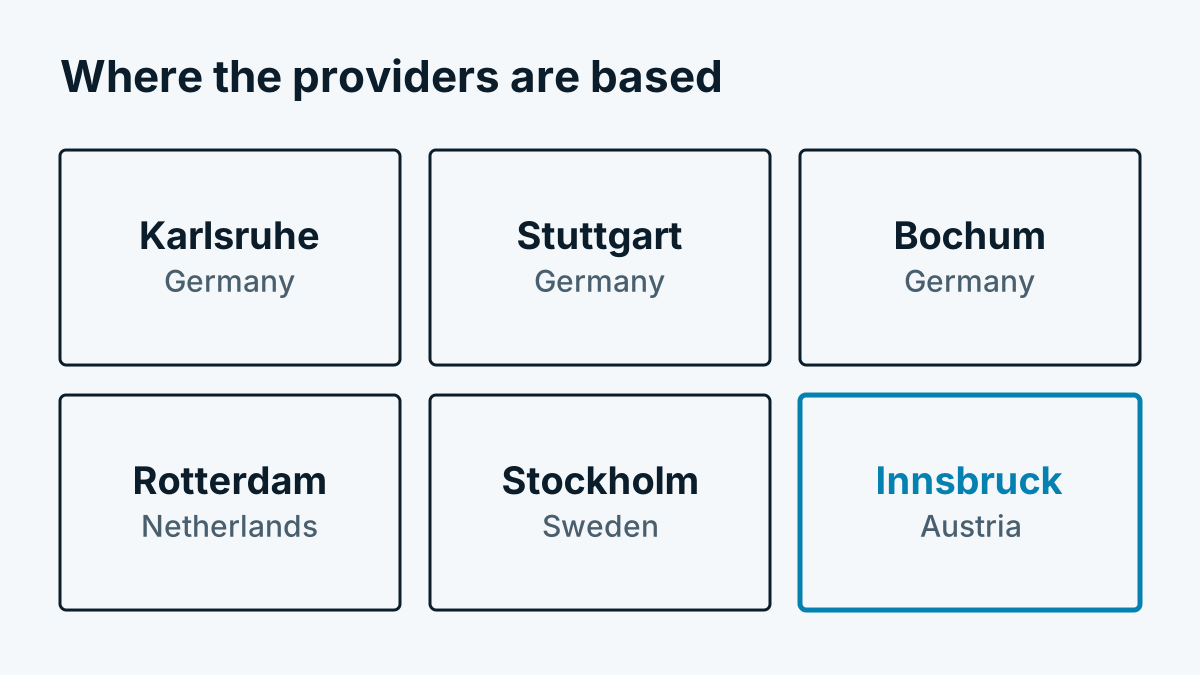
| Leadfeeder (until 2026 Dealfront) | Dealfront Group GmbH, Karlsruhe | Formed from Leadfeeder and Echobot, back under the name Leadfeeder since 2026 | Leadfeeder |
| LeadLab | WiredMinds GmbH, Stuttgart | According to its legal notice, part of the Dealfront group | WiredMinds legal notice |
| SalesViewer | SalesViewer GmbH, Bochum | German provider, states that it stores data with no link to the IP address | SalesViewer legal notice |
| Leadinfo | Leadinfo, Capelle aan den IJssel (Rotterdam region), Netherlands | Own office in Düsseldorf | Leadinfo blog |
| Albacross | Albacross, Stockholm, Sweden | Combines identification with advertising aimed at selected companies | Agency test by Publicare |
| Whovisit | ARAVILO, Innsbruck, Austria | That is us: company level only, lookup in the network registry, IP is not stored | Privacy principle |
There are also tools aimed mainly at the US market, some of which try to assign individual people rather than companies. For websites with visitors from the EU, that is a legal matter of a different kind. You will find a classification in Visitor identification and GDPR: a sober assessment.
Where the tools really differ
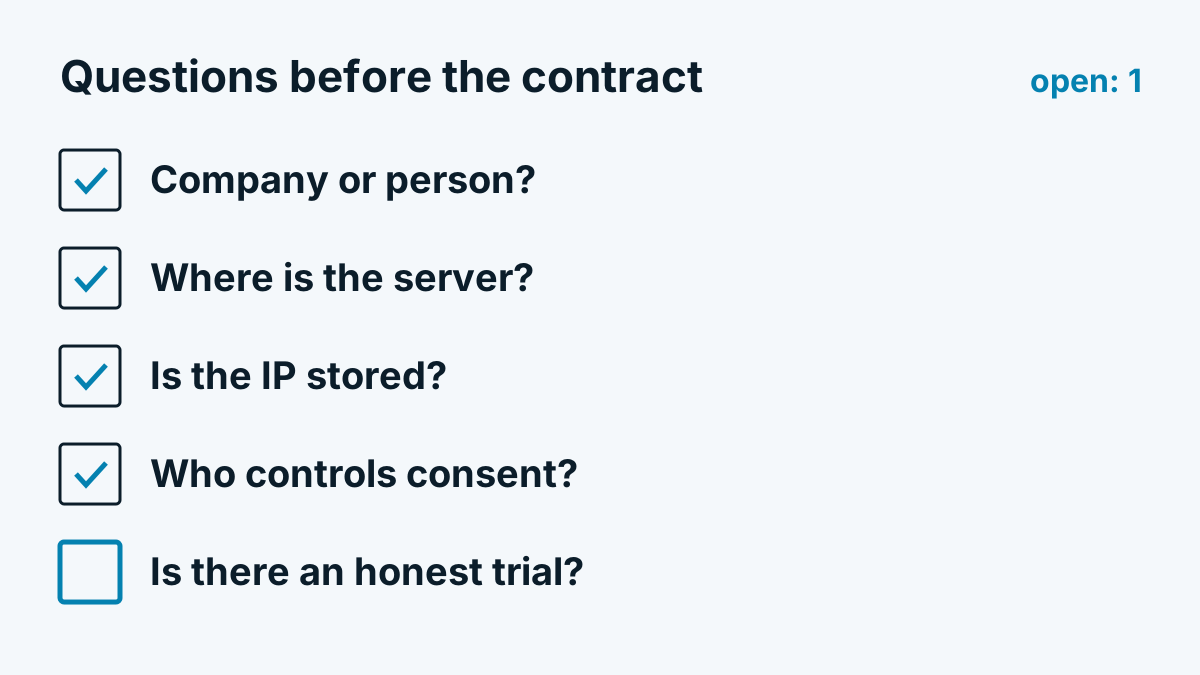
The home pages sound similar. The differences lie in five points that you should ask every provider about yourself.
1. Where the assignment comes from. Some providers query the public network registry: to whom is the network allocated that the visit came from? Others additionally use purchased databases that assign IP addresses to companies, even behind internet provider connections. This increases the number of identified companies. But it also increases the risk of false matches, because changing addresses go out of date. More on the technology in How does company identification work? The technology in 6 steps.
2. What happens in the browser. Does the script set cookies or write to the browser's storage? This determines whether you need consent in Germany under § 25 TDDDG and in Austria under § 165 TKG. In practice you almost always need it as soon as a script reads data from the device.
3. What is stored. The IP address, an abbreviation of it, or only the result of the assignment? Have this described to you in writing, not just with the word „anonymised“.
4. Where the data is located. Server location, subprocessors and the data processing agreement belong on the table before the script goes onto your website.
5. What you can do with the data. Export, interfaces to your CRM, email notifications, audiences. An identified visit is only worth as much as the next step after it.
You will find the complete checklist with warning signs in Comparing visitor identification: 12 criteria for choosing.
How to compare numbers fairly
Every provider quotes an identification rate. These figures can hardly be compared, because everyone counts differently. A fair comparison works only with your own website:
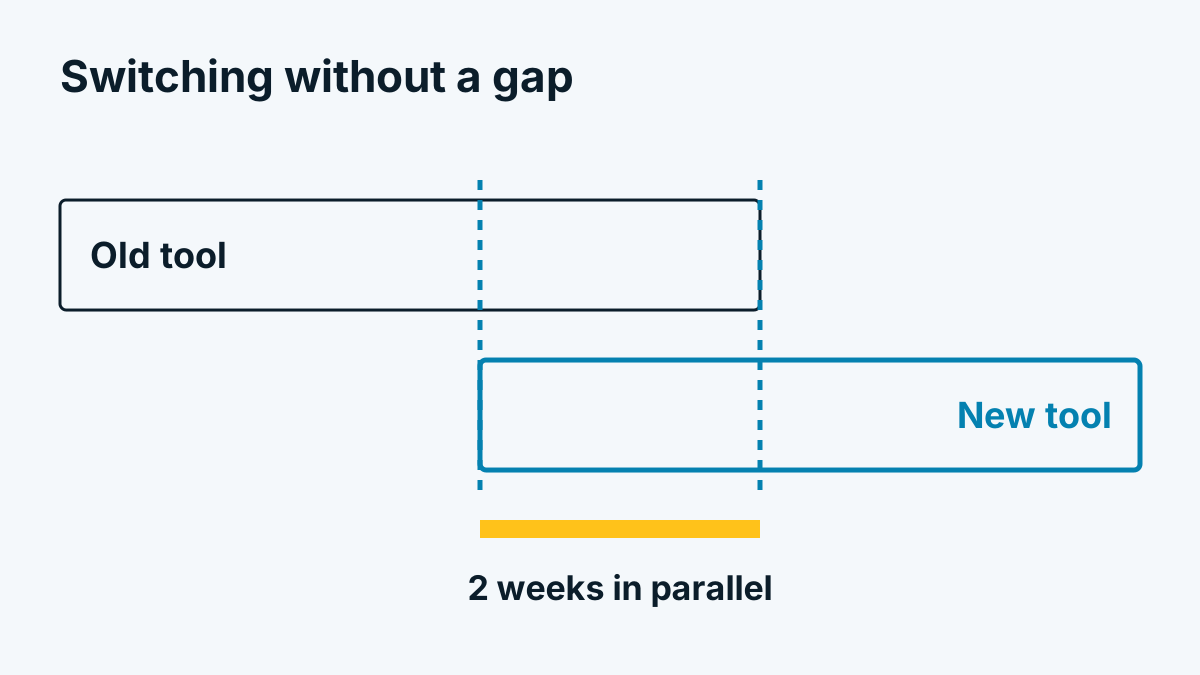
- Run two tools in parallel for two weeks, both loaded only after consent.
- Lay the lists of identified companies side by side.
- Check ten companies from each list by hand: does the company exist? Does it fit the pages that were read?
- Count how many of the plausible companies each tool found.
More matches are only better if they are correct. Why rates fluctuate so much is explained in Identification rate: why the figures vary so much.
Frequently asked questions
Which provider is the best? That depends on whether many matches, little data processing, a particular price or a connection to your CRM matters more to you. A test on your own website answers the question better than any ranking.
Do Dealfront and Leadfeeder belong together? Yes. Dealfront was the name of the platform from 2023 to 2026, which is now called Leadfeeder again. The background is in Dealfront is Leadfeeder again: what changed in 2026.
Are there free tools? Some providers have free plans with a few days of history or a few companies. That is enough to get an impression. For a fair comparison you need the full range of functions over at least two weeks.