Basics · 7 November 2026 · 4 minute read
What visitor identification can do and what it cannot
Visitor identification shows companies, not people. What the data tells you, where it can mislead and which expectations to set before you start.
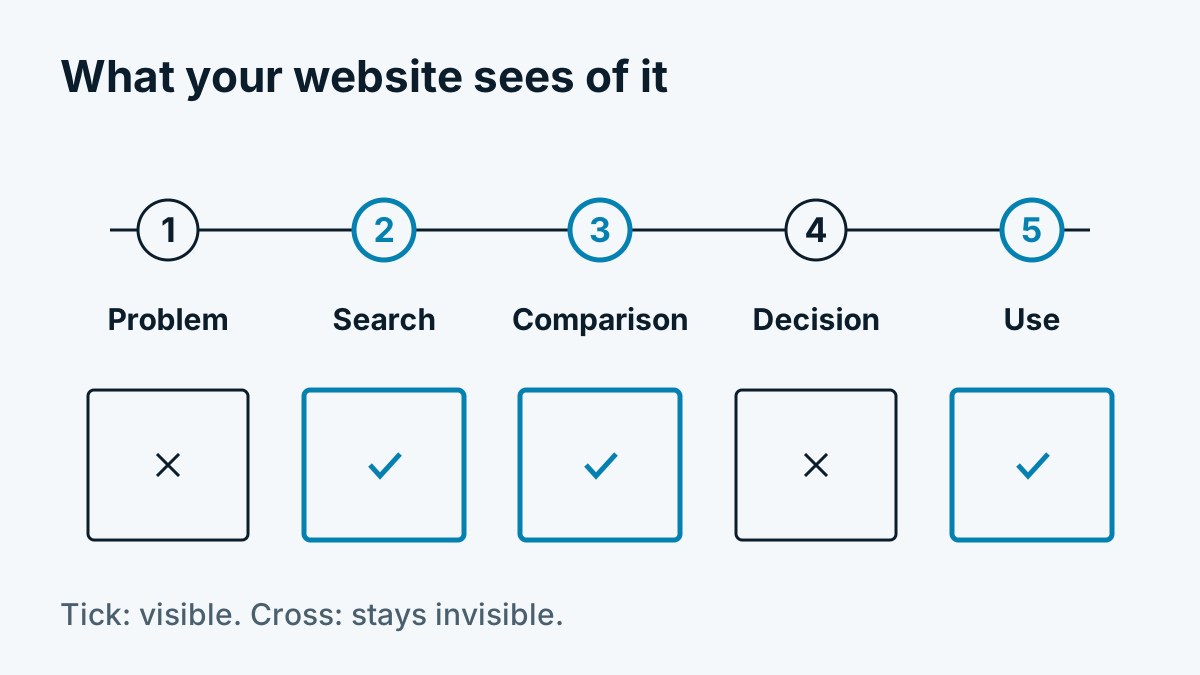
B2B websites rarely get many form submissions. Anyone buying a machine, software or consulting reads along for a long time, compares and often enquires only weeks later. In web analytics, this period remains a grey mass. Visitor identification, also called company identification, aims to make this mass readable: it assigns visits to a company.
So that you do not start with false expectations, here is a sober stocktake.
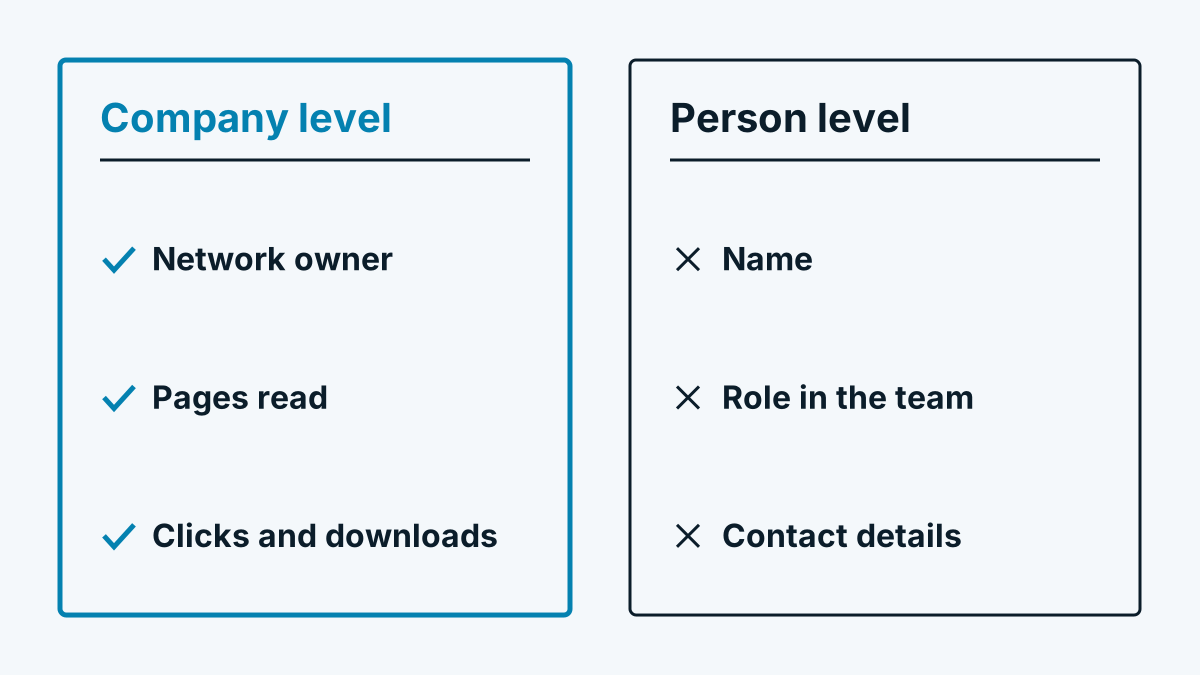
Company level instead of person level
The assignment works via the network owner of the IP address. This is the company or institution to which the network the visit came from is registered. The result is a company name, not the name of a human being.
This is not a shortcoming but a deliberate limit. Identifying individuals, for example by merging visits with profiles from social networks, is legally delicate in the EU and generally needs a much stronger basis. You will find a classification in Visitor identification and GDPR: a sober assessment. The company level is the part you can map cleanly with manageable effort.
Typical uses
- Sales: Who gets called first is often decided by interest. A company that has read service and reference pages three days in a row is a different case from one that looked at the home page once.
- Marketing: You see which content is read by companies in your target group. Not just which gets many clicks.
- Agencies: You can show clients which companies come to their sites, without having to explain an analytics account to them.
What the data does not tell you
An identified visit is an indication, not proof of buying interest. Four stumbling blocks:
- A visit is not a wish to buy. Competitors, suppliers, applicants, students and journalists visit websites too.
- The network owner is not always the company you mean. For corporations, the head office or an IT service provider is often listed in the registry, but the visit came from a subsidiary in another city.
- Service providers and locations. Some companies sit in the network of their service provider. Then you see the service provider instead of the company.
- A company is not a person. Whether someone with a budget read, or someone without decision-making power, you cannot see.
How to draw conclusions from page views anyway is explained in Recognising buying interest: which page views count.
Pseudonymous does not mean: without a personal link
Because no names appear, some consider the identification to be free of any personal link. That is not correct. With small companies, or with visits that can be attributed to one person, for instance because only one person there knows your site, visit data can still be personal data. Therefore plan data protection, information for visitors and deletion periods from the start, rather than relying on the absence of names.
Setting expectations correctly
Before you start, you can quickly tick off these points:
- I am aware that I see companies and not people.
- I expect that home office, mobile networks and VPN will not appear. Why that is so is explained in Identification rate: why the figures vary so much.
- I treat a visit as an indication and do not call every identified company.
- I have a consent solution on the website before the script runs.
- I know how long data is stored and who sees it.
- I have a person who works with the data in sales. Without one, the report just sits there.
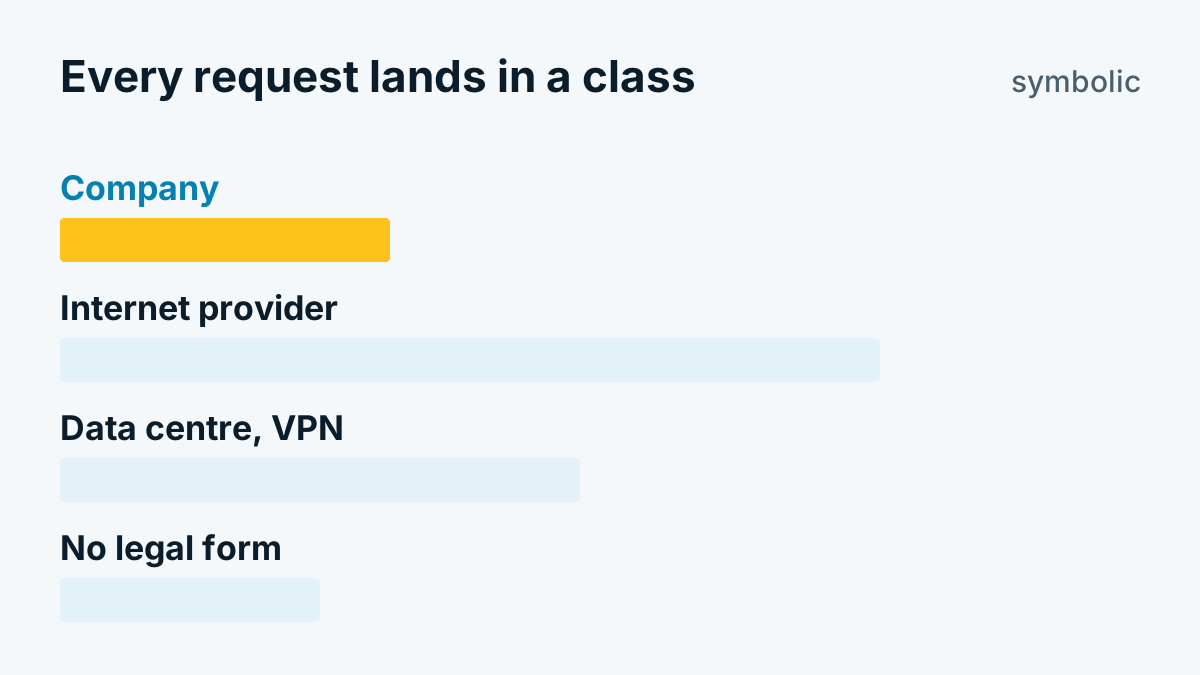
On first use, some of the identified companies often remain unclear. Helpful here is the distinction by class, as explained in Visitor classes: company, internet provider, data centre. If you are looking for an introduction, read Which companies visit my website? first.
An example of a tool that works in this way is Whovisit. It shows companies and institutions and discards the IP address after the lookup.
Frequently asked questions
Can I use this to replace leads that come through forms?
No. Forms deliver intent and contact details. Identification supplements them with the many who never fill one in.
Do I need a contract with the provider for this?
If the provider processes data on your behalf, a data processing agreement is generally required. It is best to clarify this with your data protection officer.